The most dangerous corridors for car accidents in Tacoma are Pacific Avenue and Portland Avenue. These arterial roads see a disproportionate number of serious and fatal injury crashes, even as the total number of accidents in the city has declined. Recent data shows that while overall crashes dropped from 4,975 3,528 in a recent three-year period, fatal crashes hit a ten-year high ub a recent year.
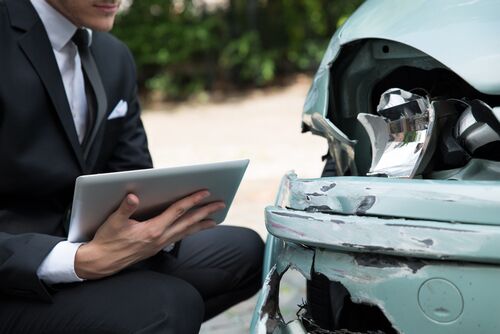
Proving fault in a collision on one of these busy roads is complicated. Insurance companies scrutinize every detail to determine liability, and they are for-profit businesses that must balance paying claims with their bottom line.
If you were injured in an accident on Pacific Avenue, Portland Avenue, or anywhere else in Tacoma, we are here to help you understand your rights. Call Pendergast Law for a straightforward evaluation of your case at (253) 238-2410.
Key Takeaways for Tacoma Accident Victims
- Pacific Avenue and Portland Avenue are hotspots for serious accidents. High traffic, speed, and frequent intersections contribute to the risk, which provides important context for your claim.
- You must file a personal injury lawsuit within three years of the accident. Missing this deadline means losing your right to compensation, so acting promptly is essential for a thorough investigation.
- Washington law may reduce your compensation if you are found partially at fault. Insurance companies will try to shift blame, so protecting yourself from unfair accusations is vital for a fair outcome.
Why Are Pacific Avenue and Portland Avenue So Dangerous?
Certain roads in Tacoma are statistically more dangerous than others, but what makes these specific corridors so hazardous? It’s usually a combination of factors that create a challenging environment for even the most careful drivers.
High Traffic Volume and Speed
These are major arterial roads, which means they carry a heavy volume of traffic moving at higher speeds. This combination naturally increases the potential for serious collisions. This illustrates how quickly a situation turns tragic when high speeds are involved.
Frequent Intersections and Access Points
Both avenues are lined with businesses, side streets, and driveways. This creates countless points of potential conflict where vehicles are turning, merging, or crossing traffic, increasing the likelihood of T-bone and head-on collisions. The constant start-and-stop flow, mixed with drivers entering and exiting the main road, requires a high level of alertness that is easily compromised by a moment of distraction.
Pedestrian and Cyclist Activity
As busy commercial and residential corridors, these streets also have significant foot and bicycle traffic. Unfortunately, the infrastructure isn't always designed to protect these vulnerable road users, leading to a higher risk of serious injury. When a car and a pedestrian or cyclist collide, the results are almost always devastating for the person without the protection of a vehicle.
When we handle your case, we investigate these contributing factors, such as road design, traffic patterns, and known safety issues, to build a comprehensive picture of how the other driver’s negligence caused your injuries. We look at everything from sightline obstructions to patterns of speeding in the area.
The Numbers Don't Lie: A Closer Look at Tacoma's Accident Statistics
It may seem counterintuitive, but the total number of car accidents in Tacoma has actually decreased in recent years. However, the accidents that do happen are becoming more severe.
Let’s break down the recent statistics to understand the reality of Tacoma’s roads.
- Rising Fatalities: As previously cited, Tacoma saw 35 fatal crashes in a recent year, the highest number in nearly a decade. This figure remained alarmingly high with 32 fatalities in another recent year.
- Serious Injuries Remain High: Alongside fatalities, suspected serious injury crashes remained high in two recent years according to WSDOT reports.
- A County-Wide Trend: This is a county-wide trend. Pierce County as a whole has seen a significant increase in traffic deaths, jumping from an average of 62 annually in a five year period to 91 per year following a three year period.
- Risky Behavior is a Major Cause: Statewide, risky behaviors like speeding, impairment, and distraction contribute to approximately 75 percent of all traffic fatalities.
What Are My Legal Obligations After a Tacoma Car Accident?
After a collision, you have specific legal duties under Washington law. Failing to meet them could affect your ability to recover compensation later.
The days following an accident are confusing. You're dealing with injuries, car repairs, and mounting stress. On top of that, you need to make sure you're following the law correctly. Did the police file a report? Do you need to file one yourself? What is the deadline?
Here are the key requirements you need to know, explained simply.
- Duty to Stop and Exchange Information (RCW 46.52.020): If an accident results in injury, death, or property damage, all involved drivers must stop at the scene (or as close as is safe) and exchange their name, address, insurance information, and vehicle registration number.
- Reporting the Collision (RCW 46.52.030): If law enforcement does not respond to the scene and file a report, you are required to submit your own Collision Report to the Washington State Patrol (WSP) within four days if the crash caused:
- Any injury or death.
- More than $1,000 in damage to any single vehicle or piece of property.
- The Three-Year Clock (Statute of Limitations): Washington law gives you three years from the date of the accident to file a personal injury lawsuit. While this may sound like a long time, building a strong case takes time. Evidence disappears, and witnesses' memories fade. Acting promptly allows for a thorough investigation while all the details are still fresh.
Our role is to handle the legal paperwork and deadlines so you don't have to. We will obtain the official police report from the WSP, ensure all necessary documentation is filed correctly, and monitor the statute of limitations closely, giving you peace of mind to focus on your recovery.
How Does a Driver’s Negligence Affect My Claim?
Most car accidents aren’t “accidents” in the truest sense of the word. They are typically entirely preventable and are the result of negligence.
In legal terms, "negligence" means that someone failed to act with reasonable care, and that failure caused harm to others. To have a successful claim, you must prove that the other driver was negligent.
Common Examples of Negligence
- Speeding or Driving Too Fast for Conditions: Exceeding the speed limit or failing to slow down in rain or traffic.
- Distracted Driving: Texting, eating, or anything else that takes a driver's attention off the road.
- Impaired Driving: Driving under the influence of alcohol or drugs.
- Running Red Lights or Stop Signs: A clear violation of traffic laws that typically leads to severe T-bone crashes.
- Negligence Per Se: In some cases, if a driver violates a safety law (like running a red light), they are considered automatically negligent. This is a legal concept known as negligence per se. It means the violation itself is considered proof of negligence.
Washington’s “Comparative Negligence” Rule
What happens if the insurance company argues you were partially at fault? Washington follows a pure comparative negligence rule. This means your potential compensation is reduced by your percentage of fault. Insurance companies will conduct a thorough investigation to look for any evidence they use to argue you were partially to blame. Our role is to protect you from unfair blame and ensure no fault is unjustly placed on you.
Proving another driver's negligence is the foundation of a successful injury claim. We meticulously gather evidence (such as witness statements, traffic camera footage, and cell phone records) to demonstrate exactly how the other party’s actions led to your injuries.
Tacoma's Vision Zero Plan: What Does It Mean for Your Case?
The city of Tacoma acknowledges its streets have safety problems and has committed to a plan to fix them.

The city adopted the Vision Zero initiative under Resolution 40559, with the goal of eliminating all traffic fatalities and serious injuries by 2035. The city council recently renewed its commitment by funding it with $1 million in the 2025-2026 budget. But what does this mean for someone who has already been hurt? Does the city’s plan affect your accident claim?
While Vision Zero is a forward-looking plan, it is still relevant to your case in a few key ways.
- Establishes a Standard of Safety: The program's goals and studies help establish what the city considers a safe standard for its roads. If your accident occurred in a location previously identified by the city as a high-injury corridor, it could support your claim by highlighting the known dangers of that area.
- Focus on Systemic Failures: Vision Zero is based on the Safe System Approach, which accepts that humans make mistakes. The focus is on designing roads, setting speed limits, and implementing policies that prevent those mistakes from resulting in death or serious injury. If poor road design or a lack of safety features contributed to your crash, this principle could be an important part of your case.
- Evidence of Known Hazards: Documents and data from the Vision Zero program could be used as evidence to show that the city or other entities were aware of a dangerous condition but had not yet taken sufficient action to remedy it.
Frequently Asked Questions About Car Accidents in Tacoma
Can I still file a claim if I was partially at fault for the accident?
Yes. As mentioned earlier, Washington's comparative negligence rule allows you to recover damages even if you were partially to blame. Your compensation will simply be reduced by your percentage of fault.
What is my car accident claim actually worth?
The value of a claim depends on several factors, including the severity of your injuries, the cost of your medical treatment (present and future), lost wages, property damage, and the impact on your quality of life. A thorough investigation is needed to determine the full extent of your damages.
Do I have to have car insurance in Washington?
Yes. Washington law requires all drivers to carry a minimum of $25,000 in liability coverage for the injury or death of one person, $50,000 for the injury or death of two or more people, and $10,000 for property damage.
What if the at-fault driver doesn't have insurance?
If the at-fault driver is uninsured, you may be able to file a claim through your own insurance policy, provided you have Uninsured/Underinsured Motorist (UIM) coverage. This is an optional but highly recommended coverage that protects you in these exact situations.
Does the City of Tacoma have any responsibility for accidents on dangerous roads?
In some cases, yes. A government entity may be held liable if your accident was caused by a dangerous road condition that they knew or should have known about and failed to fix in a reasonable amount of time. These claims are complicated and have shorter deadlines, so you must act quickly.
Don't Let an Accident on Tacoma's Streets Define Your Future
Your main concern after a crash is getting better. But while you’re focused on healing, the clock is ticking on your claim, and the insurance claim process is long, tedious, and filled with paperwork.
Our firm handles the investigation, the paperwork, and the negotiations so you can focus on your health and your family. We have years of experience handling car accident claims in Tacoma, and we are prepared to pursue the maximum compensation available for your injuries.
Take the first step toward protecting your rights. For a clear explanation of your options, call Pendergast Law at (253) 238-2410.