
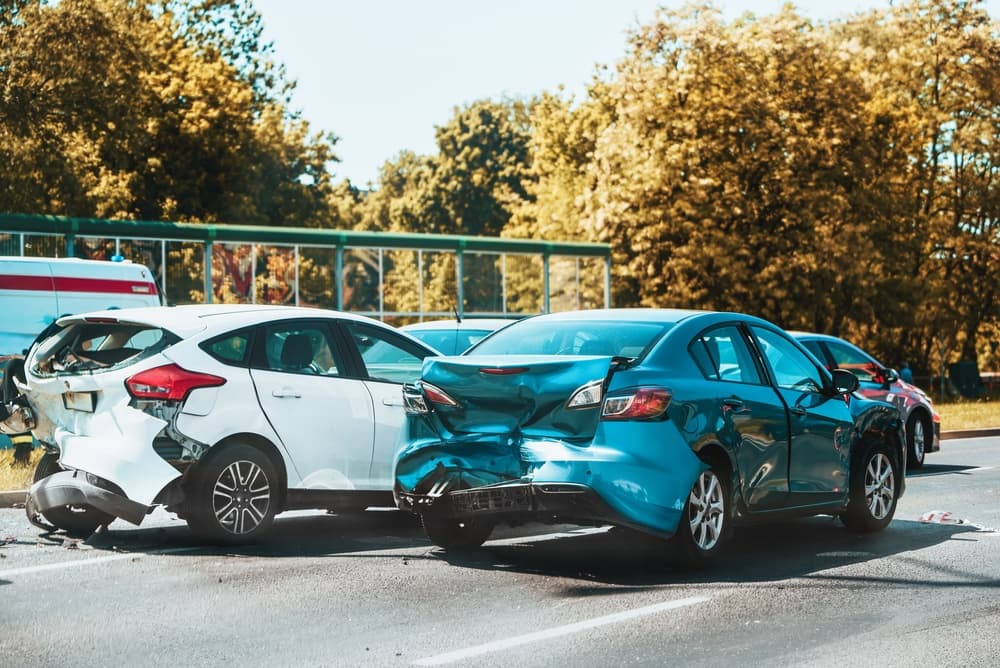
Liability in weaving trap accidents on SR 167 almost invariably falls on the driver entering the HOT lane illegally. Crossing the solid double white lines is a direct violation of RCW 46.61.165 and constitutes a breach of the duty of care every driver owes to others on the road. This maneuver is inherently dangerous because of the significant speed differential between the stopped or slow-moving General Purpose (GP) lanes and the free-flowing HOT lanes, which is frequently 12–15 mph or more.
However, establishing this liability is rarely straightforward. Insurance adjusters for the at-fault driver frequently argue comparative negligence. They may claim that you, the driver in the HOT lane, were speeding or failed to keep a proper lookout. In a frustrating twist, they sometimes use the very speed advantage the lane is designed for as a weapon against your claim.
Washington law protects drivers who have the right of way. By using evidence like Good To Go! transaction logs, traffic camera data from specific hotspots such as the S. 180th Street interchange, and professional accident reconstruction, we can often build a strong case to dismantle the defense’s argument.
If you have questions about a collision involving a lane violation on SR 167, Our Seattle car accident lawyers are here to help. At Pendergast Law, we handle these difficult cases. Call us for a free consultation with no obligation to work with us.
Key Takeaways for SR 167 HOT Lane Accidents
- An illegal lane change is negligence. Crossing the solid double white lines is a direct violation of state law designed to prevent these exact types of collisions, making it strong evidence of the other driver's fault.
- Do not accept blame for using the lane as intended. The HOT lane is designed to move faster than general traffic; an adjuster’s claim that you were "speeding" relative to other lanes is a tactic to reduce your claim under comparative negligence rules.
- Objective evidence is essential to prove your case. Your Good To Go! logs, WSDOT camera footage, and data from a vehicle's Event Data Recorder (EDR) can overcome a "he said, she said" dispute and prove the other driver's illegal maneuver was the true cause of the crash.
The Anatomy of the Weaving Trap on SR 167
The Weaving Trap is an unnervingly common scenario on Washington's State Route 167. It happens when a driver in a congested General Purpose lane makes an abrupt, illegal cut across the double white buffer lines to get into the much faster High Occupancy Toll (HOT) lane. This move is typically made without adequate signaling or any attempt to match the speed of the traffic they are merging into.
The danger is baked into the physics of the situation. Research and traffic data show that during peak commuting hours, HOT lanes typically move 12–15 mph faster than the adjacent GP lanes. This difference in speed creates a "blind" closure rate that a person’s normal reaction time simply cannot always manage. The car that seemed a safe distance behind you in your mirror is on top of the weaving vehicle in a fraction of a second.
What motivates this risky behavior? The answer usually comes down to a mix of frustration and finance. The state adjusts SR 167 tolls as frequently as every five minutes based on congestion. With recent rate hikes pushing the maximum toll to $15 as of March 2024, some drivers stuck in traffic become desperate to jump the queue. The temptation to save time and avoid a high toll leads them to make a dangerous and illegal choice.
Certain sections of the highway are notorious for these violations. Traffic studies have identified the northbound stretch just north of the S. 180th St on-ramp as a particular hotspot for illegal entries into the HOT lane. If you were hit in one of these areas, you were the victim of a predictable and negligent behavior pattern common to that location.
Why Queue Jumping Is Negligence Per Se
In any personal injury case, the first step is to show that the other party was negligent. All drivers on the road owe a duty of care to others, which means they must operate their vehicle in a reasonably safe manner and anticipate the lawful flow of traffic. When a driver breaks a safety law and that violation causes the very type of harm the law was designed to prevent, it provides a powerful argument for their liability.
This is where the legal concept of negligence per se comes into play. Simply put, the act of crossing those double white lines is, in itself, evidence of negligence. The law, RCW 46.61.165, exists specifically to prevent the chaotic and dangerous situation created by vehicles making sudden, unexpected entries into a high-speed lane. The violator cannot logically claim their action was safe when it is explicitly forbidden by a traffic safety statute.
The Gap-Wait Behavior Proves Intent
Observations of driver behavior in these corridors show that violators sometimes engage in a signal and gap-wait maneuver. This observation is telling. It shows the illegal lane change is a deliberate act, not an accidental drift. The driver identifies a gap, waits for their moment, and executes a move they know is against the rules. This deliberate choice to violate the law for convenience of saving just six or seven minutes represents a higher level of fault than a momentary lapse of judgment.
This deliberate act is almost always the proximate cause of the crash. This is a legal term that means it was the primary action that, in a direct sequence of events, resulted in the injury. Even if the HOT lane driver was traveling at the speed limit of 60 mph and the GP lane was at a standstill, the collision would not have occurred but for (i.e., if it weren’t for) the illegal merge. This point is central to defeating any attempt to shift blame.
The Comparative Fault Defense: You Were Going Too Fast
One of the most common tactics used by insurance companies in these cases is to invoke Washington's comparative negligence laws. The adjuster for the other driver might concede that their insured crossed the double white lines but will immediately argue that you share the blame because you were driving significantly faster than the traffic in the adjacent lane. They will try to assign a percentage of fault to you to reduce the value of your claim.
This argument ignores the fundamental purpose of the infrastructure itself. The SR 167 express lane is designed for maintaining speed while other lanes are congested. The entire system, including the tolling structure, is intended to keep traffic flowing at rates between 45 and 60 mph. Penalizing a driver for using the lane exactly as intended undermines the state's entire traffic management logic. You were following the rules in a lane built for that specific purpose.
Foreseeability and Reasonable Expectations
While all drivers have a duty to remain alert, you are not legally required to anticipate another driver's criminal behavior at every moment. You have a reasonable expectation that other drivers will obey the clear markings on the roadway, especially the solid double lines that serve as a barrier. The danger is created by the violator, not by the law-abiding driver maintaining a safe and legal speed.
However, there is a nuance: if a driver in the HOT lane was going 80 mph in a 60 mph zone while the GP lane was stopped, a judge or jury would likely find that driver partially at fault. The key distinction lies in whether your actions were reasonable under the circumstances. Maintaining the posted speed limit in a lane designed for it is almost always considered reasonable. If you have been accused of partial fault for simply using the HOT lane as intended, it is a sign that you should seek legal guidance.
Analyzing Specific High-Risk Corridors: Northbound vs. Southbound
Northbound Risks: The Funnel Effect
The northbound approach to the I-405 interchange is a major high-risk zone. As the HOT lane nears its terminus, and with heavy congestion commonly stemming from the S. 180th St on-ramp, a funnel effect is created. Drivers stuck in the GP lanes see their opportunity to bypass traffic dwindling, which may lead to an end-of-restriction psychology. This prompts desperate, last-second dives into the HOT lane, and traffic data confirms that violation rates are highest in this stretch.
Southbound Risks: The On-Ramp Scramble
Traveling southbound presents different, but equally dangerous, scenarios. The areas around the Willis Street and SR 516 on-ramps in Kent are frequent trouble spots. Queues from these on-ramps might bleed out into the mainline GP lanes, bringing traffic to a halt. This prompts some drivers who have just merged onto the highway to immediately shoot for the fast-moving HOT lane, crossing the buffer zone without ever establishing themselves in the GP lanes first.
Why does this geography matter to your case? Because knowing exactly where the collision happened allows your attorney to subpoena the correct WSDOT camera feeds and analyze the traffic density data for that specific time. This information corroborates your account of events and may discredit the other driver's claims.
Evidentiary Challenges: Proving the Illegal Weave
Without clear evidence, these accidents quickly devolve into a he-said, she-said situation. The driver who caused the crash may claim, "I was already in the lane for a while," or "I merged at a legal access point further back." Overcoming this requires objective data.
Leveraging WSDOT Data
- Good To Go! Transponders: Your transponder log is powerful evidence. We use it to prove you were traveling continuously in the HOT lane, paying tolls as required. Conversely, the other driver will likely have no toll record for that time—or a record that suspiciously begins at the exact moment of impact, proving they just entered.
- Traffic Cameras: While WSDOT cameras are primarily for monitoring traffic flow and are not always recording, retained footage might be recovered. Even if it doesn't capture the crash itself, it may show the traffic conditions like a dead-stopped GP lane that motivated the other driver's dangerous weave.
Data from the Vehicles
- Event Data Recorders (EDR): Also called a vehicle's black box, the EDR in newer cars records critical data in the moments before a collision. In a severe crash, the other car's EDR may show a sharp, sudden steering angle and throttle application. This data directly contradicts a story about a safe, legal merge and points to a last-second weave.
- Witness Statements: Never underestimate the importance of an impartial witness. A statement from another driver who saw the queue jump happen can be decisive, cutting through the conflicting stories of those involved in the crash.
Frequently Asked Questions About Accidents in SR 167 HOT Lanes
Does WSDOT bear any liability for not preventing the weaving?
Generally, no. Under the principle of sovereign immunity and design discretion, the state is usually protected from liability for highway design choices. An exception might exist if a specific, known defect was reported and went unaddressed for an unreasonable amount of time, but this is a very high bar to clear.
The other driver says I should have yielded even though they crossed the double lines. Are they right?
They are likely referring to the Last Clear Chance doctrine, which is very limited. It would only apply if you had a clear and obvious opportunity to avoid the collision and failed to do so. In general, the right of way belongs to the driver already established in the lane. You are not obligated to slam on your brakes every time a car in the next lane signals, especially when they are separated by a double white line.
Does it matter if the other driver was a single occupant illegally using the HOT lane?
Yes, it is highly relevant. It helps establish a pattern of rule-breaking behavior. If they were already violating occupancy and toll laws before causing the crash, it severely undermines their credibility when they try to claim they were driving carefully and obeying other traffic laws.
Could I use my dashcam footage if it shows I was going 5mph over the limit?
Yes, and you absolutely should discuss it with an attorney first. In nearly every case, a minor speed infraction is viewed as insignificant compared to the reckless act of making a dangerous and illegal lane change that directly caused a collision.
Don't Let a Rule-Breaker Shift the Blame

You paid the toll, you followed the rules, and you used the HOT lane exactly as the Washington State Department of Transportation designed it. You should not have to pay for the consequences of an accident because another driver decided their time was more valuable than your safety.
It is completely normal to feel angry and frustrated that a commute designed to save you time has now cost you weeks or even months of painful recovery and financial stress. Our role at Pendergast Law is to handle the legal battle and the insurance negotiations so you can focus entirely on getting better.
If you were hit by a driver who illegally entered the SR 167 HOT lanes, we will help you obtain the traffic data, vehicle evidence, and witness testimony needed to prove your case. Call Pendergast Law today to discuss your legal options.