
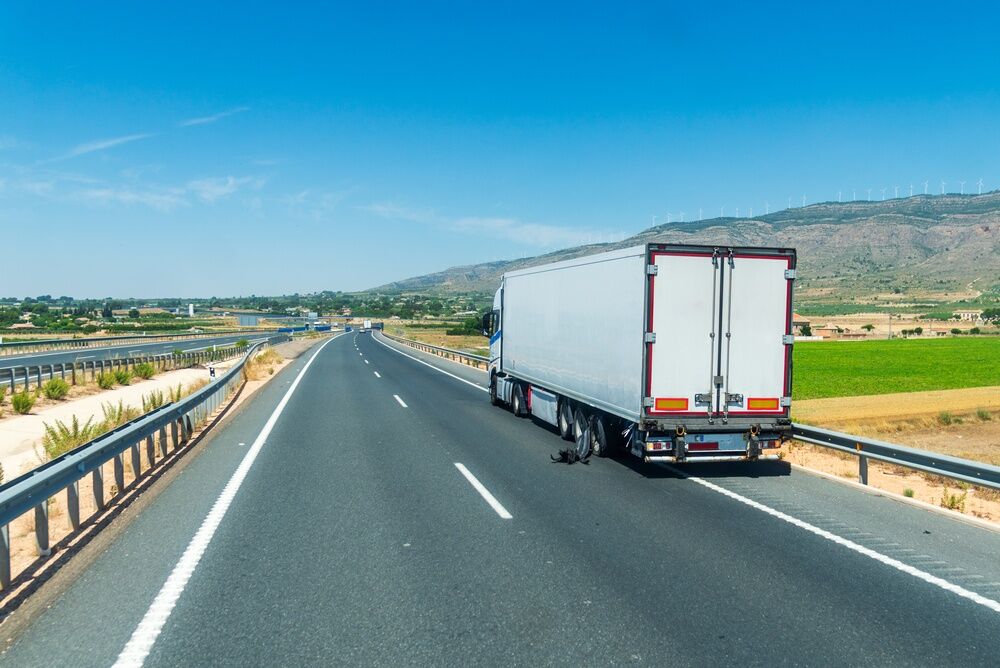
Who Is Liable for a Cargo Load Securement Truck Accident in Washington?
When a truck crashes because its cargo was not properly secured, liability can fall on the driver, the trucking company, or the business that loaded the freight, depending on who failed to follow federal and state securement rules. Washington's pure comparative fault system also lets injured people recover even when more than one party shares the blame.
- Federal rules (49 CFR Part 393, Subpart I) set the securement standard for most commercial trucks.
- Washington's RCW 46.61.655 makes it illegal to drive with a load that can shift, drop, or escape.
- More than one party can share fault, and you generally have three years to file under RCW 4.16.080.
Every case turns on its own facts, so the specific details of your crash matter.
A cargo load securement truck accident happens when freight that was tied down or loaded improperly shifts, falls, or spills, causing a commercial truck to lose control or dropping debris into the path of other drivers.
These crashes are often preventable, and they raise a clear question about who failed to follow the rules. If you were hurt by an unsecured load on I-5, SR-167, or another Puget Sound roadway, a Seattle truck accident attorney can help you identify every party responsible and pursue the recovery you need to heal.
At Pendergast Law, we have spent more than 30 years representing injured people across Western Washington. We have recovered over $700 million for more than 12,000 clients, and we bring that same focus to serious commercial truck cases.
SCHEDULE A CONSULTATIONKey Takeaways about Cargo Load Securement Violations
- Federal cargo securement standards apply to most commercial trucks and require the load to stay in place during hard braking and sharp turns.
- Washington law separately prohibits operating a vehicle with a load that can drop, shift, or escape onto the road.
- Liability for an unsecured load crash may reach beyond the driver to the trucking company, the shipper, or a third-party loading crew.
- Washington's pure comparative fault rule allows injured people to recover compensation even when they share part of the blame.
- Injured people generally have three years from the crash date to file a personal injury claim in Washington.
What Are Cargo Load Securement Rules for Trucks?
Cargo securement rules are the federal and state standards that require freight to be tied down, blocked, or contained so it cannot move during transport. The main federal standard comes from the Federal Motor Carrier Safety Administration and is found in 49 CFR Part 393, Subpart I. It applies to commercial trucks rated at 10,001 pounds or more.
Under these rules, the securement system must hold the cargo in place against strong forces in every direction, including hard forward braking and sudden lateral movement. The combined strength of all tie-downs must equal at least half the weight of the cargo. Drivers also have to inspect the load within the first 50 miles and recheck it during longer trips.
Washington adds its own layer of protection. RCW 46.61.655 makes it unlawful to drive any vehicle unless it is loaded so that no part of the load can drop, sift, leak, or otherwise escape onto the highway. Together, these rules give injured people a clear standard to measure a trucker's conduct against.
How Unsecured Loads Cause Truck Crashes
Unsecured loads cause crashes when freight shifts the truck's balance or when cargo leaves the trailer entirely. A load that slides to one side can push a trailer toward a rollover or add to a jackknife, and freight that falls onto the road becomes an immediate hazard for everyone traveling behind the truck.
Common failure patterns show up again and again in these cases:
- Too few tie-downs, or straps and chains rated below the weight of the load.
- Cargo stacked or placed so it can slide forward during braking.
- Flatbed loads like lumber, pipe, or machinery that are not blocked or braced.
- Loads left unchecked after hours on the road, when straps loosen and shift.
Any one of these can turn a routine haul into a serious collision. Shifting freight is one of several mechanical chain reactions we see in heavy-truck cases, alongside other trucking-liability scenarios that trace back to how a vehicle was loaded, driven, and maintained.
Who Can Be Held Liable for an Unsecured Load Crash?
Liability for an unsecured load crash can reach several parties, not just the person behind the wheel. The key question is who had a duty to secure the freight correctly and who failed to meet it.
Parties who may share responsibility include:
- The truck driver, who must inspect and confirm the load is secure before and during the trip.
- The motor carrier, which is responsible for training, equipment, and enforcing securement rules.
- A shipper or warehouse that loaded the trailer improperly or misreported the weight.
- A third-party loading company hired to prepare, block, or strap the freight.
Because federal rules place duties on both the driver and the carrier, more than one company is often at fault. Sorting out these relationships early is one of the most important steps in building a strong claim.
SCHEDULE A CONSULTATIONProving a Cargo Securement Violation in Your Claim
Proving a securement violation starts with preserving the evidence that shows how the load was prepared and handled. Much of that proof sits in records the trucking company controls, which is why acting quickly matters.
Helpful evidence in these cases often includes:
- Post-crash inspection reports and any citations issued at the scene.
- The bill of lading and load manifest showing the weight and how freight was arranged.
- The carrier's securement policies, training logs, and inspection records.
- Electronic logging data and photos of the strapping, blocking, or tie-downs.
Taken together, these documents can reveal whether the load met the 50 percent working-load-limit standard and whether the required inspections actually happened. We work to secure this evidence before it disappears.
How Does Washington's Comparative Fault Rule Affect Recovery?
Washington's pure comparative fault rule, set out in RCW 4.22.005, lets you recover damages even if you were partly at fault, with your award reduced by your share of the blame. A driver found 20 percent responsible for a collision, for example, can still recover 80 percent of their damages.
This rule matters in unsecured load cases because insurers often try to shift blame onto the injured person to lower what they owe. Careful investigation and clear evidence help keep the focus where it belongs, on the parties who failed to secure the freight.
Timing also matters. Under RCW 4.16.080, you generally have three years from the date of the crash to file a personal injury lawsuit in Washington. From the Port of Tacoma to the I-5 corridor, we handle Tacoma trucking accident claims and cases throughout the Puget Sound region.
How Pendergast Law Helps Injured Truck Accident Victims
Pendergast Law brings more than three decades of Washington injury experience to every truck accident case. With offices in Seattle, Renton, and Tacoma, and Spanish-speaking staff, we make it easier for injured people and their families to get answers close to home.
We have recovered over $700 million for more than 12,000 clients, including people hurt in serious commercial vehicle crashes. Our team investigates how the load was secured, identifies each responsible party, and handles the legal work so you can focus on recovery.
SCHEDULE A CONSULTATIONFAQs about Cargo Load Securement Truck Accidents
Here are answers to questions we often hear from people injured by unsecured or shifting truck loads in Washington.
What counts as an unsecured load under Washington law?
An unsecured load is any load that is not fastened well enough to keep it from dropping, shifting, or escaping onto the road. RCW 46.61.655 covers this, and it applies to more than just large trucks. Even smaller vehicles hauling debris or materials can be cited when a load is not secured.
Are cargo securement rules different for interstate trucks?
Yes, most large commercial trucks must follow federal FMCSA securement standards in addition to Washington law. These federal rules set detailed requirements for tie-downs, working load limits, and inspections. A truck crossing state lines is almost always subject to them.
Can the company that loaded the truck be held responsible?
Yes, a shipper, warehouse, or loading crew can share liability if they loaded or secured the freight improperly. This often comes up when the driver had no real chance to see or fix the problem. Identifying the loading party is part of a thorough investigation.
What if part of the fault was mine?
You can still recover compensation under Washington's pure comparative fault rule. Your award is reduced by your percentage of fault, but partial fault does not shut you out of a claim. This is why insurers work so hard to assign blame to injured people.
How long do I have to file a claim after a truck accident?
You generally have three years from the date of the crash under RCW 4.16.080. Waiting can make evidence harder to recover, so it helps to act early. Some situations can change this deadline, so it is worth confirming your specific timeline.
What compensation may be available after a cargo load securement truck accident?
Injured people may seek compensation for medical bills, lost income, future care, and pain and suffering. Washington does not cap most personal injury damages. The right amount depends on the severity of the injuries and how the crash has affected your life.
Talk With a Seattle Truck Accident Team Today
Injured by an unsecured or shifting truck load? Pendergast Law fights for accident victims throughout Western Washington. Our team is ready to investigate your crash, identify every responsible party, and pursue the full recovery you deserve.
Call (206) 620-0707 for a free consultation, available in English and Spanish.
SCHEDULE A CONSULTATION