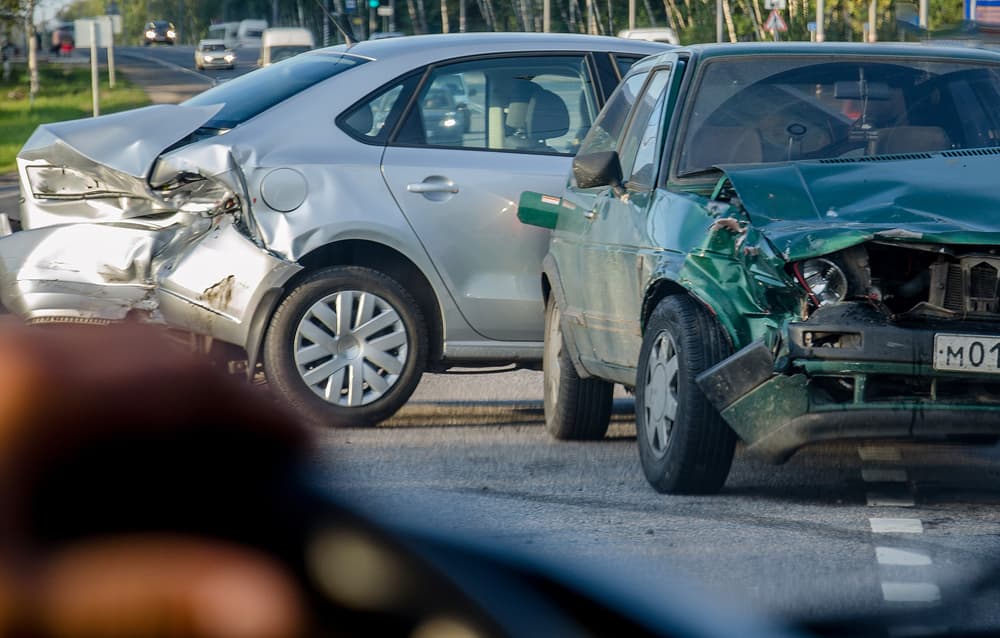
Most people assume the dealership's insurance covers their own vehicle. That's not how it works. When you take a car for a test drive, your personal auto insurance typically becomes the primary policy, and the dealership's coverage only kicks in after yours is exhausted.
If you're carrying Washington's minimum limits ($25,000/$50,000/$10,000), a serious accident can blow through your coverage fast, and the dealership's insurer may come after you personally through subrogation to recover what they paid.
The dealership will point to the waiver you signed and claim you assumed all responsibility. But Washington courts scrutinize these agreements, and they can't protect a dealership from its own negligence, like handing you a car with bald tires or an unrepaired safety recall. They also can't override state insurance law.
One factor changes the liability picture significantly: whether a salesperson was in the car. If an employee was directing your route or controlling the test drive, Washington courts may treat the situation as a joint venture, which makes it much easier to argue the dealership shares responsibility for what happened. An unaccompanied test drive shifts more liability onto you.
If you've been in a crash during a test drive or you were hit by someone in a dealer vehicle, call our Seattle car accident lawyer at Pendergast Law for a free consultation. We'll review the waiver, identify which policies apply, and determine how liability should actually be allocated.
Key Takeaways for Crashes During a Test Drive
- Your personal auto insurance is usually the primary policy. Due to the permissive use doctrine, your own insurance is typically expected to pay first, before the dealership's policy, which may surprise many drivers.
- A salesperson's presence in the car can shift liability. If a dealer's employee was in the vehicle, it may be considered a joint venture, making it easier to argue that the dealership shares legal responsibility for the accident.
- Liability waivers are not always enforceable. Washington courts strictly scrutinize these waivers, and they cannot protect a dealership from its own negligence, such as providing an unsafe vehicle.
The Hierarchy of Insurance: Whose Policy Pays First?
The Permissive User Doctrine
In most situations, auto insurance follows the car, not the driver. However, test drives usually present an exception.
When a dealership hands you the keys, they are granting you permissive use of their vehicle. Under the terms of most personal auto policies, your own liability coverage extends to any vehicle you are driving with permission, including a dealer's car. Because of this, insurance companies typically consider the test driver's personal policy to be the primary source of coverage in a crash.
Dealership Fleet or Garage Insurance
Car dealerships are required to carry substantial insurance policies, also called garage liability or fleet insurance, that cover their entire inventory.
While this provides a safety net, dealerships structure these policies to protect their own financial interests. Frequently, their policy is written as excess coverage. This means it is designed to pay out only after the limits of the primary policy (yours) have been completely exhausted.
The Dangerous Gap in Coverage
This hierarchy creates a serious problem if the test driver is uninsured or carries only the state-mandated minimums. In Washington, the minimum liability limits are:
- $25,000 for bodily injury or death of one person.
- $50,000 for total bodily injury or death in a single accident.
- $10,000 for property damage.
A moderately serious accident could easily surpass these limits, especially the low property damage cap. If a test driver with minimum coverage causes $40,000 in damage, their policy will pay the first $10,000. The remaining $30,000 becomes the responsibility of the dealership's excess insurance policy. This brings another legal concept into play.
Understanding Subrogation
Even if the dealership's insurance pays the remaining balance, the fight may not be over. Their insurer will likely turn around and pursue a subrogation claim.
Subrogation is the process where an insurance company, after paying a claim, seeks reimbursement from the party who was legally at fault. The dealership’s insurer might pay to fix their damaged vehicle and then file a lawsuit against you (or your insurer) to recover every dollar they spent. This may leave an underinsured driver facing a significant personal lawsuit.
The Salesperson Factor: Agency Theory and Liability
After a test-drive crash, a dealership’s first move is typically to place 100% of the responsibility on the driver. After all, you were the one behind the wheel. This argument, however, feels deeply unfair, particularly if a salesperson was in the car with you, directing your route, talking about the vehicle's features, or even encouraging you to open it up a little. His or her presence is a key legal factor that could shift a large portion of the liability back to the dealership.
Agency Theory and Joint Venture: When the Salesperson is Present
Washington courts have recognized that an accompanied test drive is fundamentally different from a solo one. When a salesperson is in the vehicle, the law may view the situation as a joint venture or a form of agency. This means both parties (the driver and the dealership, through its employee) are working toward a common goal: completing the sale of the car.
Under this theory, the dealership retains constructive control over the vehicle. The salesperson may direct the route, control the length of the drive, and instruct the driver on using the car's features. Because the dealer's employee is an active participant, it becomes much easier to argue that the dealership shares in the legal responsibility for what happens. Their right to control the situation makes them partially liable for the outcome.
Unaccompanied Test Drives and Bailment
The legal landscape changes if the dealership lets you take the car out alone. This situation is typically viewed as a bailment—a legal relationship where physical possession of personal property is transferred from one person (the bailor, or dealership) to another (the bailee, or driver), who subsequently has possession of the property.
In this case, the legal responsibility shifts more heavily onto you as the driver. Without a salesperson present, the argument for shared control or a joint venture weakens considerably, making it more likely that your personal insurance will be held primarily responsible.
Negligent Entrustment: When the Dealer Never Should Have Handed Over the Keys
There is another exception: negligent entrustment. This legal theory holds a vehicle owner liable if they allow someone to drive their car when they knew, or reasonably should have known, that the driver was incompetent, reckless, or otherwise unfit to operate the vehicle.
For example, if a dealership representative hands the keys to someone who is visibly intoxicated, lacks a valid driver's license, or is clearly too inexperienced to handle a high-performance vehicle, the dealership could be held directly liable for any resulting harm, regardless of who was in the car.
Liability Waivers: Are They Bulletproof in Washington?
Nearly every dealership will ask you to sign a form before a test drive. Buried in the fine print is usually a liability waiver. If an accident occurs, the dealership will immediately point to this document as definitive proof that you agreed to assume all financial responsibility. It is a powerful intimidation tactic, but it is not the final word.
Many people believe the myth: "I signed a piece of paper, so I have no rights and must pay for everything."
The reality is that these pre-drive waivers are not always as ironclad as dealerships want you to think. Washington courts scrutinize these agreements, especially when they involve personal injury. They are frequently considered contracts of adhesion—take-it-or-leave-it agreements where one party has all the bargaining power. As such, they are subject to strict legal limitations.
Key Limitations of Test Drive Waivers
- They cannot waive the dealership's own negligence. A waiver generally cannot protect a dealership from liability for its own wrongful acts. For example, if the crash was caused by the dealership's failure to maintain the vehicle, the waiver is unlikely to be enforced.
- They cannot override state insurance laws. A private agreement cannot nullify statutory insurance requirements. The hierarchy of primary and excess insurance coverage will still be governed by Washington law, not by the dealership’s boilerplate form.
- They must be clear and conspicuous. For a waiver to be valid in Washington, its language must be unambiguous and clearly displayed. If the waiver clause is buried in tiny font among other paragraphs or is worded in a confusing way, a court may deem it unenforceable.
Do not assume that signing a waiver automatically makes you liable. It is a defense the dealership will use, but it is a defense that could be challenged. Consulting with an attorney will help you determine if the waiver you signed is legally binding.
Comparative Negligence: How Washington State Determines Fault
In the real world, accidents are rarely 100% one person's fault. Multiple factors and decisions may contribute to a crash. Washington State law recognizes this reality through its specific fault system, which could have a major impact on crashes during a test drive.
Pure Comparative Negligence (RCW 4.22.005)
Washington operates under a legal doctrine known as pure comparative negligence. Simply put, this rule allows an injured party to recover damages even if they were partially to blame for the accident. Your compensation is simply reduced by your percentage of fault. This means that even if you are found to be partially at fault, you may still recover a portion of your damages from the other responsible party.
How Comparative Fault Applies to Test Drives
This comparative fault system is particularly relevant in test drive accidents, where blame may be shared between the driver and the dealership. Consider these scenarios:
- A test driver is going slightly over the speed limit (driver's fault), but the crash is made worse because the dealership's car had a steering component that was subject to an active safety recall (dealership's fault).
- A test driver merges into traffic too aggressively (driver's fault), but at that moment, the salesperson screams and grabs the steering wheel, causing the driver to lose control (dealership's fault).
In both cases, a jury could assign a percentage of fault to each party. This prevents a situation where a driver who made a minor mistake is forced to pay 100% of the financial damages when the dealership also contributed to the cause of the accident.
The 100% Rule for Multiple Parties (RCW 4.22.070)
When an accident involves multiple entities—such as the test driver, the dealership, and another driver on the road—Washington law requires that the total fault must add up to 100%. The court or jury will determine the percentage of blame attributable to every party that caused the damages.
When You Are the Victim: Hit by Someone on a Test Drive
What if you were just driving to work or running errands when you were hit by a car with dealer plates? Do you pursue the individual who was behind the wheel, or the large dealership whose name is on the license plate frame?
You may need to file claims against both. This is a third-party claim, and it is typically difficult. Your first claim would likely be against the at-fault driver's personal auto insurance policy. However, as mentioned previously, many drivers carry only the minimum insurance required by law, which may be insufficient to cover the full extent of your injuries and vehicle damage, especially in a serious crash.
This is where the dealership's commercial policy becomes so important. Victims of a serious accident typically need access to the dealership's higher policy limits to be fully compensated for medical bills, lost wages, and other damages.
To do this, you must prove that the dealership shares responsibility for the accident, either through the joint venture theory (if a salesperson was present) or through negligent entrustment. Preserving evidence that connects the dealership to the crash is a necessary step to ensuring you may access all available sources of compensation.
FAQ for Crashes During a Test Drive
Does my personal car insurance cover me if I'm driving a dealer's car?
Yes, in most cases. Your personal auto insurance policy typically extends permissive use coverage to a vehicle you are test driving, making your policy the primary one in the event of a crash.
What if the dealership car had a mechanical failure that caused the crash?
If a mechanical issue like brake failure or a tire blowout caused the accident, liability may shift to the dealership for failing to properly maintain their vehicle. This could also potentially involve a product liability claim against the car's manufacturer.
Can the dealership sue me for loss of value on the car?
Yes. Even after a vehicle is perfectly repaired, it has an accident history, which reduces its resale value. This is called diminished value. The dealership may try to sue you to recover this loss. Whether they succeed depends on the test drive agreement and the specifics of the case.
What happens if I was test driving a car and got hit by an uninsured driver?
In this scenario, your own Uninsured/Underinsured Motorist (UIM) coverage would likely apply to your injuries. For damage to the dealership's car, their fleet insurance would probably cover it, as the uninsured driver was at fault.
Do I have to pay the dealership's insurance deductible?
The test drive waiver you signed might state that you are responsible for the dealership's deductible. However, this point is often negotiable, especially if there is evidence that the dealership shares some fault for the accident.
Protecting Your Financial Future After a Dealership Accident

You do not have to accept the dealership’s version of events. Whether you are receiving aggressive subrogation letters from their insurer or your own claim has been unfairly denied, Washington law provides avenues to dispute fault and protect your assets. It is normal to feel intimidated when facing a large dealership's insurance company, but you do not have to face them alone.
Contact Pendergast Law today to discuss the details of your accident. We will help you understand your rights and work to ensure responsibility is placed where it truly belongs.