
Who Is Liable for a Jackknife Truck Accident in Washington?
A jackknife truck accident in Washington rarely comes down to a single cause, and more than one party may share the blame. Depending on what sent the trailer swinging, responsibility can fall on the truck driver, the trucking company, the crew that loaded the freight, or a maintenance provider.
Here is the short version of who may be at fault:
- The truck driver, when speeding, fatigue, or hard braking played a role
- The trucking company, for hiring problems, tight schedules, or skipped maintenance
- A cargo or repair company, when shifting loads or brake failure contributed
Pinpointing the right parties usually takes a close look at the evidence from the crash.
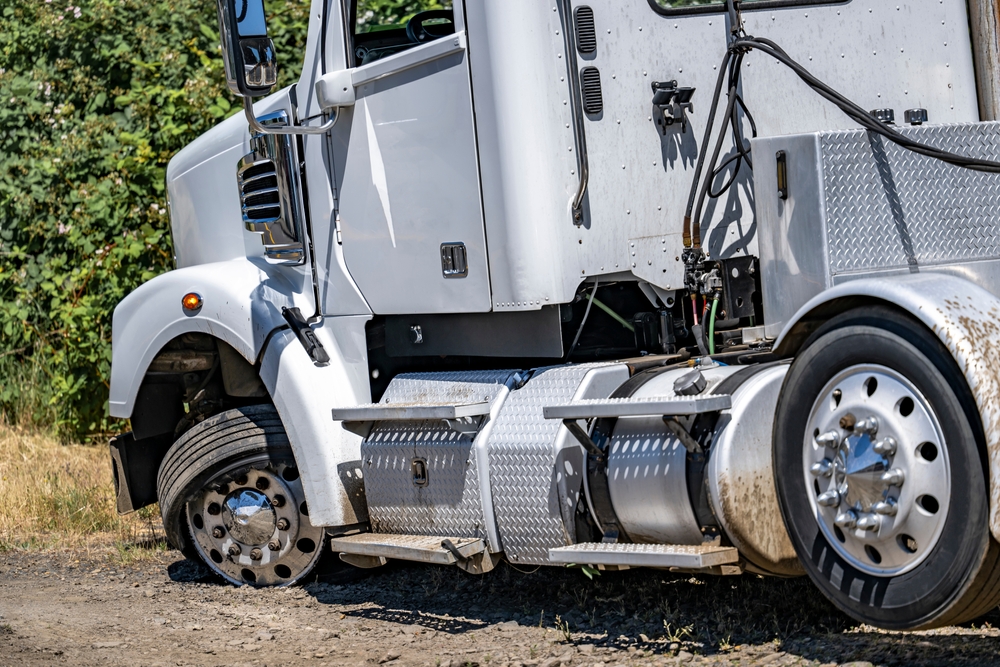
A jackknife truck accident can happen in seconds, yet the harm it leaves behind can last for years. When a loaded big rig folds at the joint where the cab meets the trailer, the smaller cars around it often have nowhere to go. We understand how frightening that is, and we are here to help you understand what comes next.
Washington's rain-slicked highways and crowded I-5 corridor make these crashes a real danger for everyone on the road. Below, we walk through how a jackknife happens, who may be held accountable, and how our team supports injured people across the Puget Sound. Talking with a Seattle truck accident attorney early can protect the evidence that shows what really happened.
SCHEDULE A CONSULTATIONKey Takeaways about Jackknife Accident Liability
- A jackknife truck accident happens when a trailer skids and swings out to form a sharp angle with the cab.
- Common causes include hard braking, slick pavement, unbalanced cargo, brake failure, and driving too fast for conditions.
- More than one party can be liable, including the driver, the trucking company, cargo loaders, and maintenance providers.
- Washington follows pure comparative fault, so an injured person can recover even when partly at fault.
- The state generally gives three years to file a personal injury or wrongful death claim.
What Is a Jackknife Truck Accident?
A jackknife truck accident occurs when the trailer of a tractor-trailer skids and swings outward until it forms a sharp V or L shape with the cab. The name comes from the way a folding pocketknife closes, since the trailer bends toward the cab at a sudden angle.
This kind of crash usually starts when the truck's wheels lose traction, and the heavy trailer keeps pushing forward. As the trailer slides sideways, it can sweep across several lanes at once.
For nearby drivers, there is often little time to react. A jackknifing rig can block a highway, trigger a chain-reaction pileup, or crush a passenger vehicle caught in its path.
What Causes a Big Rig to Jackknife?
A big rig usually jackknifes when the trailer's wheels lose grip, and the trailer moves faster than the cab in front of it. Several conditions raise that risk on Washington roads:
- Sudden or hard braking, especially in stop-and-go traffic
- Wet, icy, or oily pavement that cuts down tire traction
- Driving too fast for conditions, particularly on steep downhill grades
- Improperly loaded or unsecured cargo that shifts the trailer's weight
- Worn brakes, bald tires, or other equipment failures
- Driver fatigue or distraction behind the wheel
Federal rules from the Federal Motor Carrier Safety Administration limit how long a driver can stay behind the wheel, because tired drivers react more slowly to changing conditions. When a company or driver ignores those limits, the chance of a serious jackknife accident climbs.
SCHEDULE A CONSULTATIONWho Can Be Held Liable When a Truck Loses Control?
Liability for a jackknife truck accident can rest with any party whose choices helped set the crash in motion, and often it is shared among several. Commercial trucking involves many hands, so the driver is rarely the only one who may answer for the harm.
These parties may share responsibility for a jackknife crash:
- The truck driver, for speeding, fatigue, distraction, or braking too hard
- The trucking company, for careless hiring, unrealistic delivery schedules, or skipped inspections
- The company that loaded the freight, for unbalanced or poorly secured cargo
- A maintenance or repair shop, for overlooking worn brakes or tires
- A parts manufacturer, for defective brakes, tires, or coupling hardware
Because so many parties can play a part, our attorneys look past the driver to trace every source of accountability. Finding each responsible party can also open more than one insurance policy to help cover your losses.
How Washington's Comparative Fault Law Affects Your Claim
Washington uses a pure comparative fault system, which means you can still recover money even if you were partly responsible for the crash. Your award is simply reduced by your share of the fault, as spelled out in RCW 4.22.005.
Say a jury decides your damages total a certain amount but finds you 20% at fault. Under pure comparative fault, you would still receive 80% of that amount. Even a driver found mostly at fault can recover something.
Washington also follows joint and several liability under RCW 4.22.070, which can matter when several parties share the blame. This rule can help you collect full compensation when one at-fault party cannot pay their share.
One more deadline matters. Washington generally gives injured people three years to file a claim under RCW 4.16.080, and the same three-year window usually applies to wrongful death claims. Waiting too long can close the door on your case for good.
Where We Handle Washington Truck Accident Claims
We represent injured drivers, passengers, and families across the Puget Sound, from downtown Seattle through South King and Pierce counties. The I-5 corridor ties these communities together, and it carries much of the heavy truck traffic that makes jackknife crashes a regional concern.
Our team also handles Renton commercial truck crashes near the busy I-405 and SR-167 interchange, where Boeing shift changes and daily commutes keep the roads packed. Farther south, we take on Tacoma trucking accident claims around the Port of Tacoma and the I-5/SR-16 corridor, where port and military traffic mix with commuters.
Local knowledge helps in these cases. Knowing how traffic backs up near Harborview Medical Center or how rain settles on the Aurora Avenue grade can shape how we investigate and present a claim.
How Our Team Supports Injured Truck Accident Victims
Strong truck accident claims are built on evidence gathered early, before it disappears. Trucking companies often send investigators to the scene within hours, and we work to preserve the same proof on your behalf.
For more than 30 years, our firm has stood beside injured people throughout Washington, recovering over $700 million for our clients. In one case, we secured a $4 million recovery for a man whose foot was crushed when a commercial truck struck him.
We handle the paperwork, the insurance calls, and the investigation so you can focus on healing. This is not about getting even. It is about accountability and the resources you need to rebuild your life.
FAQs about Jackknife Truck Accidents
Below are answers to questions we often hear from people hurt in jackknife and other truck crashes across Washington.
How long do I have to file a jackknife truck accident claim in Washington?
You generally have three years from the date of the crash to file a personal injury lawsuit in Washington. Wrongful death claims usually follow the same three-year window, counted from the date of death. Because evidence can fade quickly, it helps to reach out well before that deadline.
Is a jackknife accident always the truck driver's fault?
No, a jackknife accident is not always the driver's fault. A shifting cargo load, failed brakes, or a defective part can each send a trailer out of control. Sorting out the true cause often takes a full investigation of the truck, its records, and the road.
What evidence helps prove liability in a truck accident?
Key evidence includes the truck's black box data, the driver's logbook, maintenance records, and dashcam or traffic camera footage. Cargo loading records and the driver's hours can also reveal whether safety rules were broken. Much of this proof sits with the trucking company, so acting quickly matters.
Should I talk to the trucking company's insurance adjuster?
It is wise to be cautious before giving a recorded statement to the trucking company's insurer. Adjusters work for the company, and early statements can be used to shift blame onto you. You can politely decline and speak with your own attorney first.
What compensation can I pursue after a jackknife truck crash?
You may be able to pursue compensation for medical bills, lost wages, future care, and pain and suffering. In catastrophic cases, that can include the cost of long-term rehabilitation and lost earning ability. The goal is to cover the full weight of what the injury has taken from you.
Do I need a lawyer to handle a truck accident claim?
Truck accident claims tend to be more complex than typical car accident cases, since they can involve federal rules and several at-fault parties. A lawyer can identify every responsible party, preserve evidence, and deal with aggressive insurers. Many injury firms, including ours, offer free consultations so you can weigh your options.
Talk With a Washington Truck Accident Attorney Today
If a jackknife truck accident has turned your life upside down, you do not have to face the road ahead alone. Our team is ready to listen, answer your questions, and handle every legal detail while you focus on recovery.
Call Pendergast Law at (206) 620-0707 for a free consultation, and let us help you take the next step toward justice.
SCHEDULE A CONSULTATION