
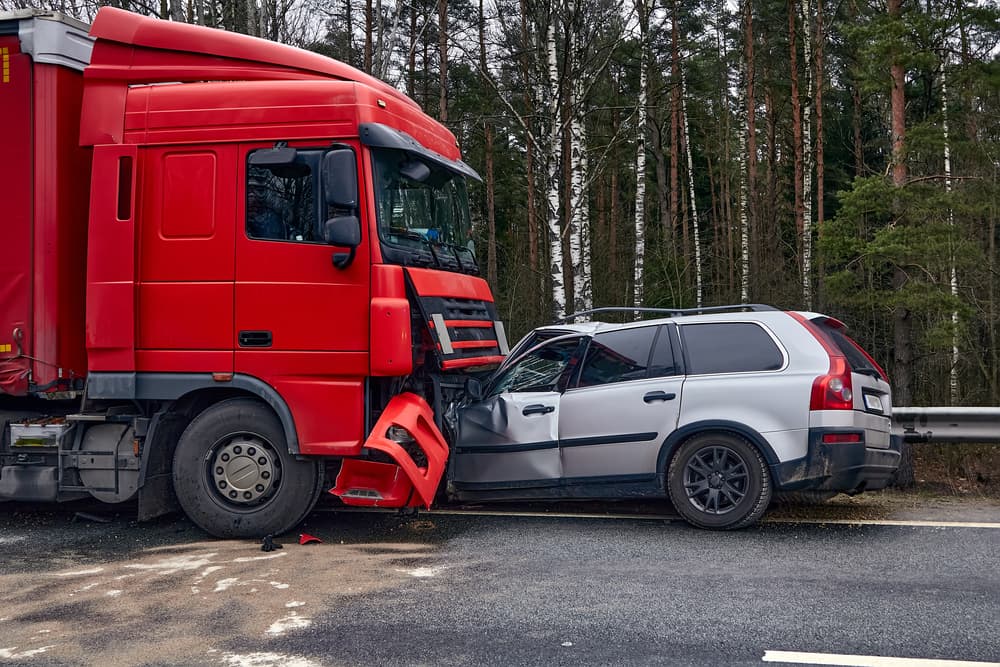
Who Can Be Held Liable in a Washington Truck Accident Besides the Driver?
After a serious truck crash in Washington, the driver is rarely the only party at fault. The trucking company, the freight broker that arranged the load, and the shipper that owned or loaded the cargo may each share responsibility.
- A freight broker may be liable for negligently selecting an unsafe carrier.
- A shipper may be liable for improper loading or for hiring a carrier with a poor safety record.
- Washington's pure comparative fault rules let you pursue every at-fault party.
Which parties share the blame always depends on the facts of your crash.
Understanding truck broker liability in Washington starts with a simple truth: the freight moving along Interstate 5 was almost never arranged by one company alone. A shipper owns the goods, a broker often matches the load to a carrier, and the carrier puts a driver behind the wheel. When any link in that chain acts carelessly, an unsafe truck can end up on a Seattle-area highway.
At Pendergast Law, we look past the driver to find every party that contributed to a crash. If a commercial truck injured you or someone you love, a Seattle truck accident attorney on our team can trace the load back through the broker and shipper to see who else should answer for the harm.
SCHEDULE A CONSULTATIONKey Takeaways about Truck Broker and Shipper Liability in a Washington Truck Accident
- Truck crashes often involve a chain of businesses, including the driver, the motor carrier, the freight broker, and the shipper.
- A freight broker can face liability for negligently selecting a carrier it knew or should have known was unsafe.
- A shipper can be liable for hidden loading defects and, in some cases, for choosing an unsafe carrier.
- Washington's pure comparative fault system allows an injured person to recover from more than one at-fault party.
- Identifying every responsible party often expands the insurance available to cover a catastrophic loss.
How Does Truck Broker Liability Work After a Washington Crash?
A freight broker can be held liable when it negligently selects a motor carrier it knew or should have known was unsafe, and that choice helps cause a crash. A broker is the middleman that matches a shipper's load with a trucking company, yet it does not own the truck or employ the driver.
For years, brokers argued that federal law shielded them from these claims. That changed in May 2026, when the U.S. Supreme Court ruled in Montgomery v. Caribe Transport II, LLC that state negligent-hiring claims against freight brokers are not blocked by the Federal Aviation Administration Authorization Act.
The Court did not make brokers automatically responsible for every wreck. An injured person must still show the broker failed to use reasonable care and that the failure contributed to the harm. Reasonable care can include checking a carrier's safety rating, insurance, and inspection history before handing over a load.
Public records often reveal what a broker knew or ignored. A carrier's history in the Federal Motor Carrier Safety Administration SAFER database is one of the first places a truck accident team will look.
When Is a Shipper Liable for a Truck Accident?
A shipper can be liable when its own conduct helped cause a crash, most often through improper loading. The shipper is the company that owns the goods and, in many cases, loads them onto the trailer.
Courts have followed the Savage Rule since 1953. Under it, a shipper stays responsible for a hidden, or latent, loading defect that the driver could not catch through an ordinary inspection. If the loading problem was obvious and the driver hauled the cargo anyway, responsibility generally shifts to the carrier.
Loading is not the only path to shipper liability. A shipper that overloads a trailer, mislabels hazardous cargo, or pressures a driver to take an unsafe load can share the blame. Poor weight distribution alone can raise a trailer's center of gravity and lead to a rollover on a sharp curve.
These decisions happen at the loading dock, often out of public view. Even so, they follow the truck onto every mile of Interstate 405 and the freight routes around the Port of Tacoma.
How Do Washington's Fault Rules Affect Broker and Shipper Liability?
Washington follows pure comparative fault, so an injured person can recover from a broker, shipper, carrier, and driver in proportion to each party's share of the blame. Under RCW 4.22.005, your own share of fault reduces your award but does not bar recovery, even when that share is large.
Washington law spreads responsibility across every entity whose negligence contributed to the harm. Under RCW 4.22.070, fault is assigned by percentage, and those percentages must total 100 percent. A jury can place part of the blame on a broker or shipper that never touched the wheel.
Consider a simple example. If a jury finds a shipper 40 percent at fault and a driver 60 percent at fault, each party answers for its portion of the damages. This structure gives an injured family more than one source of accountability.
SCHEDULE A CONSULTATIONWhy More Defendants Can Mean More Compensation
Adding a broker or shipper to a claim can open additional insurance that the driver's policy alone cannot provide. Catastrophic truck crashes routinely cause losses that outstrip a single carrier's coverage.
A broker and a shipper each carry their own insurance, and those policies can matter enormously in a serious case. Bringing every responsible party into the claim gives an injured family a realistic chance of full recovery rather than a settlement capped by one limited policy.
The details vary with the type of crash. Cargo shifts, jackknifes, and rollovers each raise different questions about who loaded, booked, and drove the truck. Reviewing other trucking-liability scenarios can show how the same layered chain of businesses appears again and again.
Our attorneys handle these claims across the region, including Renton commercial truck crashes and cases throughout the Puget Sound. For 30 years, Pendergast Law has recovered more than $700 million for over 12,000 injured people from offices in Seattle, Renton, and Tacoma.
Proving Truck Broker Liability in Washington
Proving truck broker liability in Washington depends on documents that show what the broker knew about the carrier before the load ever moved. Much of that evidence sits in federal databases and the broker's own files.
Key evidence often includes:
- Federal safety data, inspection reports, and crash history for the carrier.
- The broker's internal records of how it vetted the trucking company.
- Load, dispatch, and bill-of-lading records tying the broker to the trip.
- Insurance and contract documents that show each party's role.
Gaps in these records can be as telling as the records themselves, which is why prompt investigation matters so much.
What Is the Deadline to File a Washington Truck Accident Claim?
In most Washington truck accident cases, you have three years from the date of injury to file a lawsuit under RCW 4.16.080. Missing that deadline usually ends the right to compensation for good.
Some situations pause or shift the clock, such as claims involving a government vehicle or a person who was a minor at the time. Because evidence like inspection logs and dispatch records can disappear quickly, waiting is rarely in your favor.
SCHEDULE A CONSULTATIONFAQs about Truck Broker Liability in Washington
Here are answers to questions we often hear about holding brokers and shippers accountable after a Washington truck crash.
Can I sue a freight broker and the trucking company at the same time?
Yes. A single truck crash can support claims against the driver, the motor carrier, the broker, and the shipper together. Washington's fault rules let a jury assign a percentage of responsibility to each one.
What is the difference between a freight broker and a shipper?
A shipper owns the goods being moved and often loads them onto the trailer. A freight broker is a middleman that matches that load with a trucking company but does not own the cargo or the truck.
Does it matter if the broker is based outside Washington?
Usually not. What matters most is where the crash happened and whether Washington courts have authority over the parties. A broker in another state can still answer for a collision on a Washington highway.
Is a shipper responsible if the driver ignored an obvious loading problem?
Often not. When a loading defect is obvious and the driver accepts the cargo anyway, responsibility generally shifts to the carrier. A shipper is more likely to be liable when the defect was hidden.
How do I know whether a broker was involved in my truck accident?
The load paperwork usually reveals the chain of businesses behind a shipment. Dispatch records, bills of lading, and carrier contracts can identify the broker and shipper connected to the truck that hit you.
Can more than one company be at fault for the same crash?
Yes. Trucking cases frequently involve several at-fault parties, and Washington law is built to divide responsibility among all of them. Each company's share is measured as a percentage of the total fault.
Talk With a Washington Truck Accident Team Today
A truck crash can leave your family facing bills that one insurance policy will never cover. Finding every responsible party, from the driver to the broker and shipper, can be the difference between a partial settlement and a full recovery.
Pendergast Law has stood with injured people across Washington for 30 years, and our bilingual team is ready to review your case at no cost. Call our Seattle office at (206) 620-0707 for a free consultation in English or Spanish.
SCHEDULE A CONSULTATION