
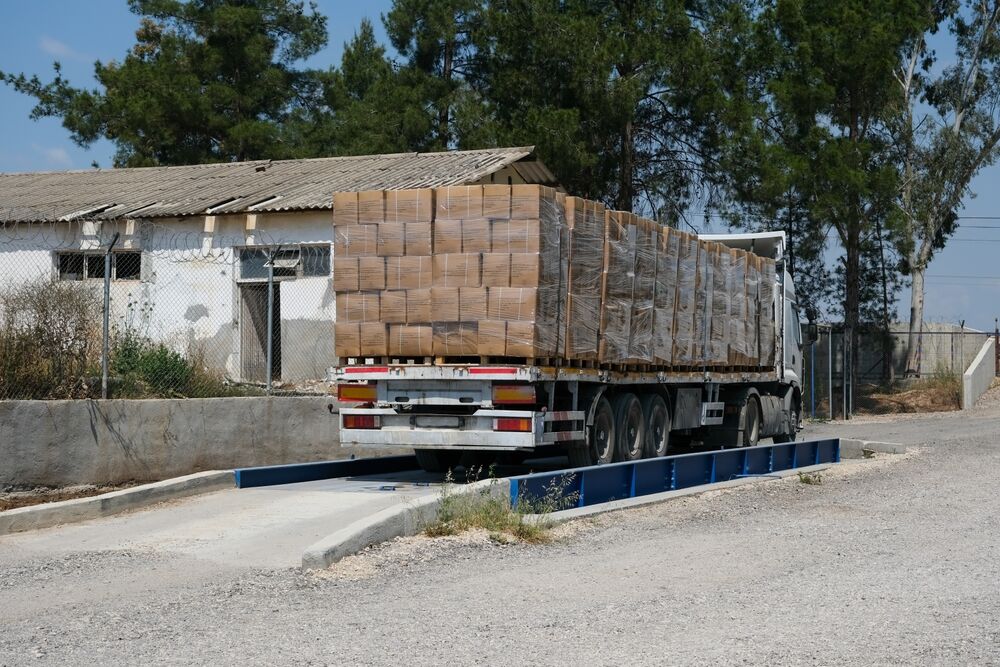
What Are Washington's Truck Weight Limits and Who Pays for Overloaded Cargo Crashes?
Most large trucks in Washington cannot exceed 80,000 pounds of total weight, and when a carrier or shipper ignores that limit or fails to secure a load, they can be held financially responsible for the crash that results. Overloading changes how a truck stops, turns, and holds the road, and those failures usually trace back to a company decision rather than a single driver.
- Washington law caps most single axles at 20,000 pounds and total gross weight at 80,000 pounds.
- Overweight and shifting loads lengthen stopping distance and raise the risk of a rollover.
- Drivers, trucking companies, shippers, and loading crews can each share fault.
Because Washington uses pure comparative fault, more than one company can be held accountable for the same wreck.
Truck weight limits and overloaded cargo rules in Washington exist to keep multi-ton vehicles predictable on crowded roads like I-5, I-405, and SR-167. When a trucking company pushes past those limits to save a trip, the added weight and instability can turn a routine drive into a serious collision.
If you were hurt by a truck you believe was carrying too much, a Seattle truck accident attorney can help you learn who loaded the trailer, who owned the freight, and who should answer for your injuries.
At Pendergast Law, we have spent more than 30 years representing injured people across Western Washington, and we handle every legal detail while you focus on healing.
SCHEDULE A CONSULTATIONKey Takeaways about Truck Weight Limits and Overloaded Cargo
- Washington limits most commercial trucks to 80,000 pounds gross weight and 20,000 pounds on a single axle under state law.
- Overloaded and poorly secured cargo makes a truck harder to stop, steer, and keep upright.
- Federal and state rules both require cargo to be tied down so it cannot spill or fall onto the road.
- Liability for an overloaded-truck crash can reach past the driver to the carrier, shipper, and loading crew.
- Washington's pure comparative fault system lets injured people recover even when fault is shared.
What Are the Legal Truck Weight Limits in Washington?
Washington caps most commercial trucks at 80,000 pounds of gross vehicle weight, with a single axle limited to 20,000 pounds under RCW 46.44.041. These numbers are not arbitrary. They reflect what brakes, tires, and pavement can safely handle at highway speed.
The full rule uses a formula that ties allowable weight to axle spacing, so longer trucks with more axles can legally carry more. Two sets of tandem axles spaced far enough apart may carry up to 34,000 pounds each. When a carrier bypasses these figures without a special permit, the truck becomes heavier and harder to control than the road was built for.
Weight limits also protect bridges and steep grades common around Seattle and Tacoma. A truck that is legal on flat ground can behave very differently descending a wet hill on SR-16. Staying within the posted limits gives every driver a fair chance to stop in time.
The Dangers of an Overloaded Truck
An overloaded truck strains its brakes, tires, and steering past their safe working range, which makes it harder to stop and easier to tip. A heavier truck needs more room to slow down, and that extra distance can turn a routine slowdown on I-5 into a rear-end collision.
Extra weight raises the truck's center of gravity and makes rollovers more likely on curves and freeway ramps. When freight shifts inside the trailer, the change in balance can pull the entire rig sideways. Rain-slick roads, a near-constant feature of Puget Sound winters, sharpen each of these risks.
Tires carry their own breaking point. A tire rated for a certain load can fail when forced to haul more, scattering debris and sending a loaded trailer across lanes. These outcomes are predictable rather than accidental, which matters a great deal when it comes to proving fault.
Cargo Securement Rules for Commercial Trucks
Federal and Washington law both require truck cargo to be tied down so it cannot spill, shift, or fall onto the road. Under RCW 46.61.655, no load may be carried unless it is fastened well enough to keep any part of it from becoming loose or hazardous to other drivers.
Federal rules go further for large commercial trucks. The FMCSA cargo securement standards in 49 CFR Part 393 require cargo to be immobilized so it will not move even during hard braking or a sudden swerve. These rules set the number and strength of the tie-downs based on the weight and length of each item.
When a loading crew skips a strap or a company rushes a departure, freight can slide, spill, or tumble into traffic. A crash caused by falling cargo or a shifting load often points to a securement failure rather than driver error alone. Sorting out which rule was broken is a key early step in any strong claim.
SCHEDULE A CONSULTATIONWho Is Liable for an Overloaded Truck in Washington?
Liability for an overloaded-truck crash in Washington can fall on the driver, the trucking company, the shipper who arranged the freight, or the crew that loaded it. More than one of these parties is often responsible, because the choice to overload a trailer usually happens well before the truck ever reaches the highway.
The trucking company sets schedules and maintenance standards, and it can be held accountable when it pressures drivers to haul more than the law allows. A shipper or freight broker who packs a trailer improperly may be among the other parties who may share fault for what follows. When a crash traces back to cargo securement violations, the company responsible for loading and tying down the freight can be pulled into the case.
Washington follows pure comparative fault under RCW 4.22.005, which means an injured person can recover even if partly at fault, with the award reduced by their share. The law also requires that the fault of every responsible party add up to 100 percent, so responsibility can be divided across several companies. Identifying each one is how we build the strongest possible recovery for our clients.
Proving Fault in an Overloaded Cargo Claim
Proving fault in an overloaded cargo claim depends on evidence that shows the truck exceeded a weight limit or carried an unsecured load. Weigh-station records, shipping and manifest documents, black-box data, and inspection reports can all reveal whether the truck was too heavy or loaded incorrectly.
This evidence can disappear quickly, which is why acting early is important. Trucking companies must keep certain records, but logs and physical proof can be lost if no one requests them in time. A prompt investigation helps preserve the manifest, the maintenance file, and the truck itself.
In Washington, injured people generally have three years from the date of the crash to file a personal injury lawsuit under RCW 4.16.080. Missing that deadline usually ends the claim for good. Across more than 30 years and over $700 million recovered for more than 12,000 clients, our team has learned how to move fast to protect the proof a case needs.
SCHEDULE A CONSULTATIONFAQs about Truck Weight Limits and Overloaded Cargo in Washington
Here are answers to questions we often hear from people injured by overweight and improperly loaded trucks in the Seattle area.
How can I tell if the truck that hit me was overloaded?
You may not know at the scene, and that is completely normal. The proof usually surfaces later through weigh-station tickets, the shipping manifest, and inspection records that compare the truck's actual weight against its legal limit. A close look at the truck's brakes and tires can also show whether it was carrying more than it should.
Can a shipper or loading company be sued for a cargo accident?
Yes, when their choices caused the crash. A shipper that overfills a trailer or a crew that fails to secure the load can share responsibility along with the driver and carrier. Washington law allows fault to be spread across every party whose actions contributed to the harm.
Does an overweight ticket mean the trucking company was negligent?
An overweight citation is strong evidence, though not an automatic finding of fault. It shows the truck broke a weight rule, which a jury can weigh alongside the other facts of the crash. Pairing that ticket with proof that the overload caused your injuries is what makes it persuasive.
What if I was partly to blame for the collision?
You can still recover under Washington's pure comparative fault rule. Your compensation is reduced by your percentage of fault, but even a person found mostly at fault is not barred from recovering something. Insurance companies often try to shift blame, so it helps to have someone protecting your side of the story.
Are Washington and federal cargo rules the same?
They overlap but are not identical. Washington's securement law applies to vehicles on state roads, while federal FMCSA rules set detailed tie-down standards for larger commercial trucks in interstate travel. A single crash can involve a violation of both.
How long do I have to file a truck accident claim in Washington?
You generally have three years from the date of the crash to file a personal injury lawsuit. Certain situations, such as a claim involving a government vehicle or an injured minor, can change that timeline. Talking with an attorney early keeps your options open.
Talk to a Seattle Truck Accident Team That Fights for You
A crash with an overloaded or unsecured truck can leave you facing serious injuries and a maze of companies pointing fingers at one another. You do not have to sort it out alone. At Pendergast Law, our bilingual team serves injured people across Seattle, Renton, and Tacoma, and consultations are always free.
Call us today at (206) 620-0707 to talk about what happened and how we can help you pursue the recovery you deserve. You heal, and we handle everything else.
SCHEDULE A CONSULTATION