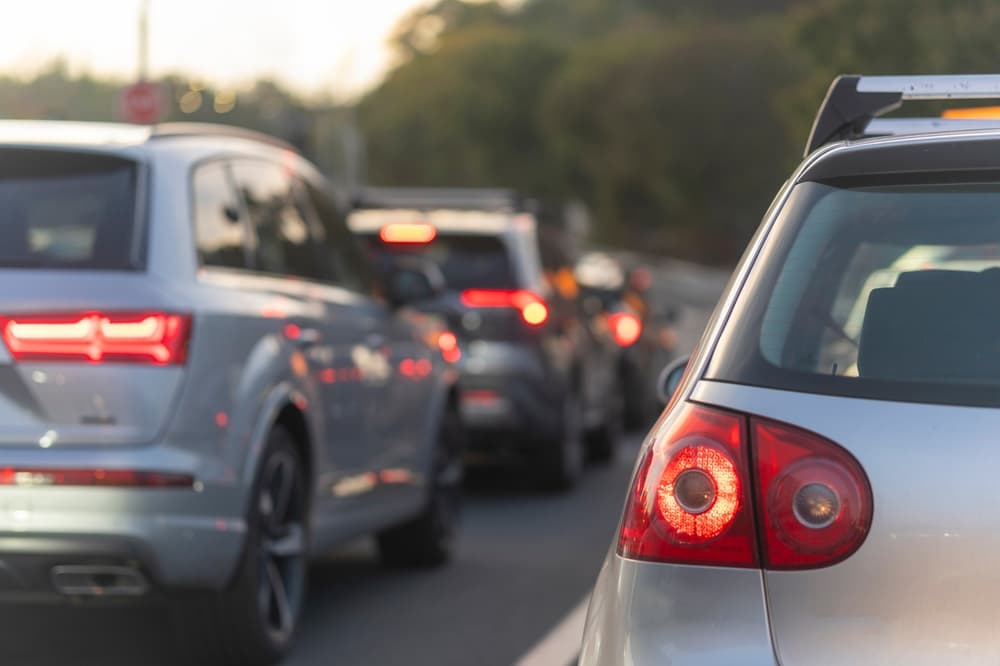
When you're stuck in fair season gridlock, the last thing you expect is the jolt of a collision. In Washington, the driver who hits you from behind is generally presumed to be at fault.
However, this rule isn't absolute, especially in the unique chaos of stop-and-go traffic surrounding the Washington State Fair. Dense traffic, sudden stops, and distracted drivers could create situations where fault is not so clear-cut.
You have a mix of out-of-town visitors unfamiliar with the roads, aggressive drivers trying to cut into parking gates, and tired families just trying to get home. Collisions in these slow-moving logjams frequently result in what insurance companies dismiss as minor impacts. Yet, these low-speed crashes frequently cause serious soft-tissue injuries that may lead to chronic pain. The insurance adjuster might minimize these claims based on the lack of visible vehicle damage.
If you have a question about a collision that occurred during fair season traffic, call our Seattle car accident lawyer today. We offer a free consultation, and there is no obligation to work with us.
Key Takeaways for Fair Season Traffic Accidents
- The rear driver is usually at fault, but not always in gridlock. Sudden stops, cut-offs, and other chaotic traffic conditions may shift liability.
- You may recover damages even if you are partially to blame. Washington's pure comparative fault law allows you to seek compensation reduced by your percentage of fault.
- Low-impact collisions can still cause significant injuries. Do not let an insurance adjuster dismiss your claim based on minor vehicle damage, as the force of the crash is often transferred to the vehicle's occupants.
The Anatomy of a Gridlock Crash: Why Fair Season is Different
The problem is the behavior of the drivers in that volume. A typical commute has a rhythm. Fair traffic does not. It is unpredictable, congested, and filled with drivers whose attention is anywhere but on the road ahead.
This environment creates specific hazards you don't encounter on a normal drive. Consider these common factors:
- Rubbernecking: Drivers are looking at the fairground lights, trying to spot the Ferris wheel, or searching for hard-to-see parking signs instead of watching the brake lights in front of them.
- Unfamiliarity: You are sharing the road with people from other counties or states who have no idea about the lane patterns, sudden merges, or exit-only lanes near the fairgrounds. Their confusion leads to erratic movements.
- The Gap Shooters: In frustratingly slow traffic, some drivers become aggressive. They will dart into any small gap that opens up, forcing surrounding drivers to slam on their brakes and creating a chain reaction.
Determining Fault in Stop-and-Go Collisions
While the rear driver is presumed to be at fault, that presumption may be challenged with the right evidence. This is particularly true in gridlock scenarios where other factors contribute to the crash.
When Liability Can Shift
Let's look at a few situations where the fault isn't as straightforward:
- The Cut-Off: A driver aggressively merges into your lane, cutting you off, and immediately has to slam on the brakes because traffic has stopped. If you could not have reasonably avoided hitting them, they may be held partially or fully liable. This may fall under the sudden emergency doctrine, which protects a driver who reacts to a hazard they did not create.
- Brake Checking: Some drivers, frustrated with the traffic, may intentionally brake hard to intimidate a driver they feel is following too closely. This aggressive and dangerous act may place liability squarely on the driver who brake-checked.
- Failure to Maintain Lane: In the slow crawl toward fair parking, lanes can be poorly marked or narrowed by temporary cones. Sideswipe accidents are common as drivers drift out of their designated space.
How Does Washington’s Comparative Negligence Law Apply?
Washington is a pure comparative negligence state, governed by RCW 4.22.005. Simply put, this law means you may recover financial compensation for your injuries even if you are found to be partially at fault for the accident. The amount you may recover is reduced by your percentage of fault.
The Sandwich Accident: Liability in Multi-Vehicle Chain Reactions
The multi-car pileup is a hallmark of gridlock traffic. The most common scenario is the sandwich accident: you are stopped in traffic, a car hits you from behind, and the force pushes your vehicle into the one in front of you. You've now been in two collisions, but which one was the cause?
Washington Law and Chain Reactions
Analyzing liability in a multi-vehicle accident involves a few key legal concepts:
- The Following Car Doctrine: The general starting point is that the last car in the chain (Car C) initiated the entire event by striking the middle car (Car B). This initial impact is typically seen as the primary cause of Car B then being pushed into the lead car (Car A). Therefore, the driver of Car C is typically presumed to hold the majority of the liability.
- Following Too Closely: The law, specifically RCW 46.61.145, requires every driver to maintain a safe following distance. The insurance company for the lead car may argue that you, the middle driver, were following too closely and would have hit them anyway. Our job is to prove you were safely stopped with adequate room before the rear driver slammed into you.
Understanding Fault Allocation
Washington has largely moved away from a concept called joint and several liability in most injury cases. This means that each at-fault party is generally only responsible for paying their allocated percentage of the damages. If one driver is 80% at fault and another is 20% at fault, you must seek compensation from each of their insurance companies in proportion to their fault. This makes a thorough investigation absolutely necessary.
At Pendergast Law, our approach to investigating these pileups is methodical. We analyze skid marks, compare vehicle damage points to see if bumper heights are consistent with the story, and, when available, pull Event Data Recorder (EDR) information. This data may show your vehicle’s speed and brake application at the moment of impact, proving you were fully stopped before the chain reaction began.
Beyond the Drivers: Could the Event Organizers Be Held Liable?
Sometimes, the crash isn't caused by a single negligent driver, but by the dangerous environment created by the event itself. When fair organizers fail to properly manage the flow of traffic, they may be held partially responsible for the accidents that result.
Premises Liability and Negligent Traffic Management
Event organizers have a legal duty to provide a reasonably safe environment for their patrons, and this includes managing traffic for entering and exiting the property. This falls under a legal concept called premises liability. If an organizer creates a foreseeable hazard (for instance, by funneling thousands of cars into a single unmarked lane without any flaggers or clear signage), they may share in the liability for a resulting collision.
Claims Against Government vs. Private Entities
Who runs the fair matters. The Washington State Fair, for example, is a private non-profit organization. A claim against it would proceed like a claim against any other private company. However, many county fairs are run by government entities. Filing a claim against a city or county in Washington involves a different set of rules, including shorter deadlines and the requirement to file a specific tort claim form before a lawsuit can be initiated.
There is also the matter of vicarious liability. If a parking attendant hired by the fair or a third-party security contractor negligently directs a driver to pull out into oncoming traffic, causing an accident, the employer is responsible for the actions of their employee.
The Low-Impact Defense: Fighting Insurance Tactics
One of the most common and frustrating arguments you will hear from an insurance adjuster after a gridlock accident is the low-impact defense. They will point to the minimal damage on your bumper and suggest that you couldn't possibly be injured.
This argument ignores basic physics. Modern cars are built to be rigid to protect occupants in high-speed crashes. In a low-speed impact, the car's frame doesn't crumple to absorb the shock. Instead, that kinetic energy is transferred directly to the people inside the vehicle. The lack of vehicle damage sometimes means the occupant took the brunt of the force.
Why Gridlock Injuries Are Different
The nature of the impact also plays a part. In stop-and-go traffic, you aren't bracing for a collision. You might be relaxed, checking your mirrors, or turning to speak with a passenger. When the impact occurs unexpectedly, your muscles are not tense, making your neck and spine more vulnerable to the violent whipping motion that causes whiplash injuries and other cervical strains.
It's also common for pain from these injuries to have a delayed onset. Adrenaline from the event or the frustration of the traffic jam may mask symptoms for hours or even days. You may go home feeling fine, only to wake up the next morning with severe neck stiffness and headaches. This is a normal medical reality that insurance companies try to use against you, arguing that your injuries must not be related to the crash.
Insurance Coverages You Need to Understand
After a difficult fair season accident, understanding your own insurance policy is your first line of defense. Two types of coverage (PIP and UIM) are particularly important while liability is being sorted out.
- PIP (Personal Injury Protection): In Washington, PIP is an optional coverage, but it is incredibly valuable. It covers your medical bills and lost wages up to your policy limits, regardless of who was at fault for the accident. This allows you to get the medical treatment you need right away without waiting for the other driver's insurance to accept liability.
- UIM (Underinsured Motorist): Fair season brings all types of drivers onto the road, including some who carry only the state's minimum liability coverage ($25,000 per person/$50,000 per accident). In a multi-car pileup, a $25,000 policy can be exhausted almost instantly. If your injuries are serious, your Underinsured Motorist (UIM) coverage may step in to cover the gap between the at-fault driver's low policy limit and the actual cost of your damages.
FAQ for Fair Season Traffic Accidents
I was hit by an Uber/Lyft on the way to the fair. Does that change the claim?
Yes. Rideshare cases have different insurance tiers. If the driver was logged into the app and waiting for a ride request, a lower level of coverage applies. If they were actively transporting a passenger, a much higher commercial liability policy is in effect. An attorney will help determine which policy applies to your situation.
The accident happened in a temporary grass parking lot, not the road. Do police still come?
Police may not respond to accidents on private property unless there are serious injuries. However, you should still report it. The rules of the road still generally apply, and a driver may be found negligent for causing a crash in a parking lot.
Can I claim compensation for my fair tickets and missed event?
Yes, non-refundable tickets and other costs associated with the missed event may be included as part of your economic damages claim.
The other driver admits fault but says traffic forced him to stop suddenly. Is he still liable?
Generally, yes. Every driver has a duty to be prepared for sudden stops in gridlock traffic. Unless he proves a truly unexpected event caused him to brake, like a pedestrian running out in front of him, traffic stopping suddenly is not usually a valid legal defense.
My child was in the car but seems fine. Should I settle?
You should never settle a claim involving a minor without having them fully evaluated by a doctor. Children, especially young ones, cannot always articulate their pain, and some injuries may not be apparent immediately. In Washington, the statute of limitations for a minor's injury claim is paused until they turn 18, so there is time to ensure they are truly uninjured before closing the case.
Protect Your Rights After a Fair Season Collision

Do not let an insurance adjuster convince you that a low-speed accident in traffic equates to no injury. Washington law allows you to recover damages even in difficult, multi-vehicle scenarios, but you are responsible for proving how to untangle the liability.
Call Pendergast Law today or contact us online. We will review the details of your accident, help you understand your coverage, and ensure the right parties are held accountable.