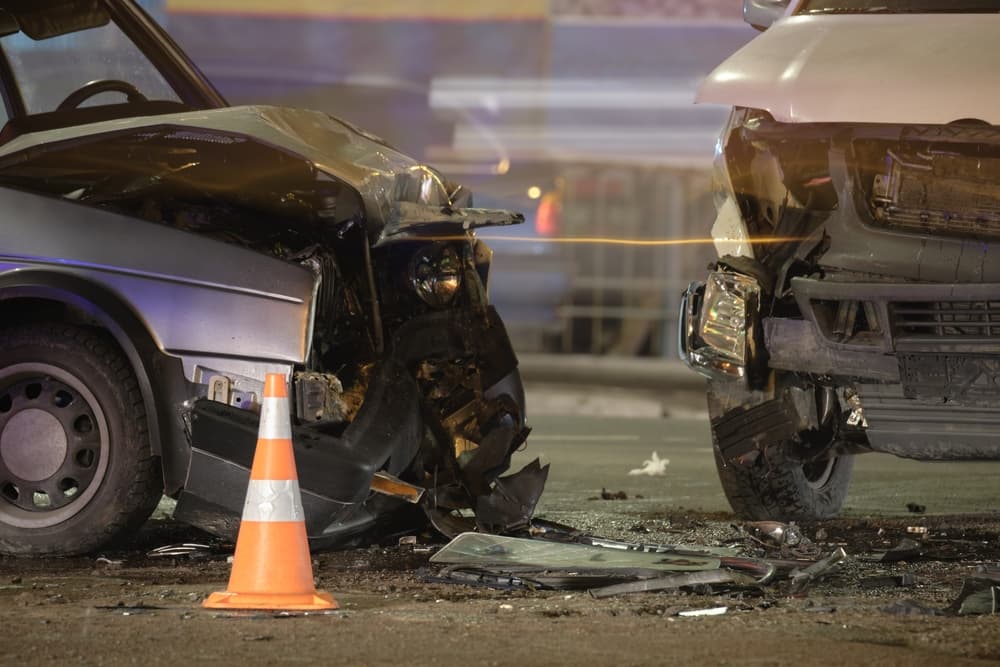
In a Point Ruston roundabout collision, the driver entering the traffic circle is typically at fault. Washington state law spells it out clearly: a driver approaching a roundabout must yield the right-of-way to any vehicle already circulating within it. If a driver enters one of Point Ruston’s Grand Loop or waterfront roundabouts and collides with a vehicle already in the circle, they have likely violated this primary duty of care.
However, while the yield to the left rule is the standard, determining liability in a roundabout crash is rarely a simple, black-and-white issue. An insurance company may look for other factors to complicate the fault picture. These could include excessive speed by the circulating driver, an improper lane change within a multi-lane roundabout, or a failure to signal an exit.
If you have a question about a collision in Point Ruston or a Tacoma roundabout, call our Tacoma car accident lawyer today. We offer a free consultation and there is no obligation to work with us.
Key Takeaways For Point Ruston Roundabout Crashes
- The entering driver is usually at fault. Washington law requires drivers to yield to vehicles already in a roundabout, making this the primary factor in determining liability.
- Washington's comparative negligence rule may affect your claim. You might still recover compensation even if you are found partially to blame, but your total award will be reduced by your percentage of fault.
- A thorough investigation is necessary to prove liability. Without traffic cameras, evidence like vehicle damage, private surveillance footage, and police reports are essential to counter an insurance company's attempts to shift blame.
The Hierarchy Of Right-Of-Way In Washington Roundabouts
The Point Ruston area is dynamic mix of local commuters, sightseers focused on the waterfront, and pedestrians moving between shops and the Waterwalk. This means that it’s a high-stimulus environment where even experienced drivers might become confused or make a panicked decision. This confusion frequently leads to collisions where the rules of the road are misapplied, and right-of-way is violated.
Washington law establishes a clear hierarchy of who has the right to go first. The golden rule of roundabouts is found in state law, which mandates that a driver entering a roundabout must yield to traffic already in the circle. This is the cornerstone of determining fault in these specific types of crashes.
A common mistake is treating a roundabout entry like a highway on-ramp, where drivers are expected to merge. This is incorrect. A roundabout entrance is a yield, not a merge. The entering driver's responsibility is to wait for a safe gap in the circulating traffic before proceeding. Forcing your way in or assuming the other driver will slow down to let you in is a direct violation of your duty to yield.
Data from the Washington State Department of Transportation (WSDOT) shows that while they may initially see a rise in minor fender-benders as drivers adjust, they significantly reduce the severe T-bone and head-on collisions common at traditional intersections. Statistics show roundabouts lead to a 75 percent reduction in injury collisions and a 90 percent reduction in fatality collisions. The first step in holding the correct driver accountable is to establish a clear timeline of events proving they violated their duty to yield before entering the circle.
When Both Drivers Share The Blame: Comparative Negligence In Tacoma
After a crash, it is common for the other driver's insurance adjuster to call you. In that conversation, they might suggest that you were partially to blame for the collision. Perhaps they claim you were traveling too fast while in the roundabout or that you failed to use your turn signal when exiting. Their goal is to find any reason to assign you a percentage of fault, which in turn reduces the amount of money their company has to pay.
You may worry that a small mistake, or even just the accusation of one, could ruin your chances of getting your medical bills and lost wages covered. However, Washington law provides a safety net.
Under RCW 4.22.005, our state operates under a pure comparative negligence rule. Simply put, this means you may recover compensation from an at-fault driver even if you are found to be partially responsible for the crash. Your total compensation is simply reduced by your percentage of fault. Our role at Pendergast Law is to gather the evidence to counter unfair allegations of fault. We handle the investigation and negotiation to minimize any percentage of blame placed on you and pursue the maximum compensation available under the law.
Analyzing Common Point Ruston Crash Scenarios
The roundabouts along the Point Ruston waterfront and Ruston Way are not like sprawling highway interchanges. They are tight, urban traffic circles designed to manage a mix of cars, cyclists, and heavy foot traffic.
Scenario 1: The Failure To Yield Entry
This is the most frequent type of roundabout collision. A driver approaching the circle might be distracted by the waterfront view or looking for a parking spot. They fail to look left for oncoming traffic, violate the yield sign, and pull directly into the path of a vehicle that is already legally circulating. The result is a side-impact or front-to-side collision.
- Legal Analysis: This is a clear violation of the primary duty to yield. In nearly all such cases, the liability rests entirely with the entering driver.
Scenario 2: The Multi-Lane Sideswipe
Point Ruston's Grand Loop features multi-lane roundabouts that require drivers to choose the correct lane before entering. A common crash occurs when a driver in the inner lane decides to exit at the last moment. They make an abrupt turn, cutting across the outer lane and sideswiping a vehicle that was traveling properly within that lane.
- Legal Analysis: RCW 46.61.140 requires a vehicle to be driven as nearly as practicable entirely within a single lane and not be moved from that lane until it may be done safely. The driver who changes lanes unsafely bears the primary responsibility for the collision.
Scenario 3: The Sudden Stop For A Pedestrian
The area around Point Ruston is bustling with pedestrians using the Waterwalk and crossing to and from shops and restaurants. A driver already in the roundabout might need to stop for a pedestrian in a crosswalk, as required by RCW 46.61.235. If the car behind them is following too closely, it could lead to a rear-end collision.
- Legal Analysis: The driver who is circulating has a legal duty to stop for pedestrians in a crosswalk. The driver behind them has an equal duty to maintain a safe following distance. The flow of a roundabout does not excuse tailgating, and the rear driver is almost always at fault in a rear-end crash.
Proving Liability Without A Traffic Camera
Unlike major intersections in downtown Tacoma or Seattle, the mixed-use developments at Point Ruston may not have dedicated traffic cameras monitoring every roundabout. When there isn't clear video footage of the collision, an insurance company might try to argue that fault is impossible to determine.
At Pendergast Law, we know how to build a case even without official traffic footage. We focus on several key areas:
- Physical Evidence: The location and type of damage on the vehicles tells a compelling story. For instance, significant damage to the passenger-side doors of your car strongly suggests you were already in the circle when another vehicle entered from your right and struck you. Conversely, heavy front-end damage on the other car points to them being the entering, at-fault party.
- Dash Cams & Private Surveillance: Many drivers now use dashboard cameras, which could provide an indisputable record of the moments leading up to a crash. Furthermore, many of the restaurants, shops, and the cinema in Point Ruston have their own security cameras. We take immediate action to send preservation letters to these businesses to secure any relevant footage before it is recorded over.
- Police Reports: The official report filed by the Tacoma Police Department or Washington State Patrol provides a foundation. We carefully analyze the officer's diagram of the scene, witness statements, and any citations issued, such as for Failure to Yield Right of Way.
- Accident Reconstruction: In cases involving serious injuries, we may work with accident reconstruction professionals. These individuals use the physical evidence, like skid mark length, debris fields, and vehicle damage, to mathematically calculate speed, position, and angle of impact. This scientific analysis could effectively counter a false claim from the other driver that you were speeding through the roundabout.
Why Roundabout Injuries Are Different (And How To Value Them)
Because they are designed to eliminate high-speed, head-on impacts, the most common collisions are sideswipes and angled T-bone crashes at lower speeds. While this reduces fatalities, it creates a different profile of common injuries.
The forces in these crashes are typically lateral, meaning they come from the side. This could lead to specific types of harm:
- Side-Impact Trauma: A direct hit to the side of a vehicle could cause shoulder and rib cage injuries, hip trauma, and head injuries if a person's head strikes the side window.
- Whiplash and Soft Tissue Injuries: Even in a lower-speed crash, the quick, jolting motion could cause significant sprains and strains to the muscles and ligaments in the neck and upper back, commonly known as whiplash. These injuries might not be immediately apparent but could lead to chronic pain if not properly treated.
When we build an injury claim, we are pursuing compensation for all of your losses, known as damages. We document every impact the crash has had on your life, including the repair costs for your car, current medical bills, the projected cost of future physical therapy, any wages you lost while unable to work, and the non-economic damages for your pain and suffering.
FAQ For Point Ruston Roundabout Accidents
Is the entering driver always at fault in a roundabout crash?
Usually, but not automatically. The entering driver has the primary legal duty to yield. However, if the circulating driver was acting recklessly (for example, by driving at an excessive speed), they could be found partially at fault under Washington's comparative negligence laws.
What if the other driver says I didn't use my turn signal to exit?
This is a common defense insurance adjusters use to shift blame. While you should always signal your intent, the other driver's duty to yield to traffic already in the roundabout is their primary obligation. A failure to signal might contribute a small percentage of fault to you, but it rarely excuses the other driver for entering the roundabout unsafely.
Can I claim against the city if the roundabout design is confusing?
This is a very difficult claim to win. Suing a government entity involves difficult rules around sovereign immunity. While a truly negligent design could be a factor, the vast majority of roundabout accident claims focus on the negligence of one of the drivers involved.
How does a yield sign differ from a stop sign in terms of fault?
A stop sign requires every driver to come to a complete stop before proceeding. A yield sign allows a driver to proceed without stopping if the way is clear. However, the legal responsibility is the same: you may not enter the intersection or roundabout until it is safe to do so, and you must give the right-of-way to traffic that does not have a sign.
Don't Let A Confusing Intersection Cost You Your Future

You followed the rules of the road; you should not have to pay for someone else's confusion or impatience.
Let our Tacoma personal injury lawyers handle the investigation while you focus on recovery. Call Pendergast Law today to review the details of your Point Ruston crash and outline your next steps.