
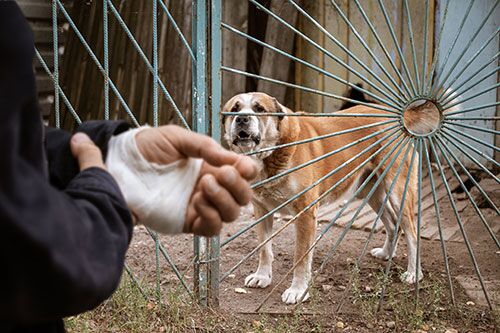
Some states require a dog bite victim to prove the owner already knew the animal was dangerous. Washington takes a different approach. In Washington state, a dog owner is liable for bite injuries regardless of whether the dog has ever bitten anyone before. There is no “free first bite.”
A Seattle dog bite lawyer familiar with Washington’s strict liability framework may help a bite victim recover medical costs, lost income, and pain-related damages even when the owner insists the dog was always friendly.
Get a Free Case ReviewKey Takeaways for Washington Dog Bite Law
- Washington’s strict liability statute, RCW 16.08.040, holds dog owners liable for bite injuries regardless of the dog’s prior behavior or the owner’s knowledge of aggression.
- The statute applies when the victim was in a public place or lawfully present on private property, including the dog owner’s property.
- Provocation by the injured person is a complete defense under RCW 16.08.060, meaning the owner may avoid liability if the victim deliberately provoked the attack.
- Washington’s three-year statute of limitations under RCW 4.16.080 applies to dog bite injury claims.
- Homeowners and renters insurance policies typically cover dog bite liability, but standard policy limits often range between $100,000 and $300,000, which may fall short for severe injuries involving surgery, infection, or permanent scarring.
What Does Washington’s Strict Liability Dog Bite Statute Actually Say?
RCW 16.08.040 is one of the more direct injury statutes in Washington law. It holds the owner of any dog that bites a person liable for damages, as long as the victim was in a public place or lawfully on private property. This statute eliminates two hurdles that victims face in many other states: proving the dog had a history of aggression and proving the owner knew about it.
How “Strict Liability” Differs From the One-Bite Rule
About 20 states still follow some version of the common law “one-bite rule.” Under that framework, the owner is only liable if the dog previously showed a dangerous tendency and the owner was aware of it. The first victim, in effect, has no claim unless they prove prior knowledge of aggression.
Washington eliminated that rule with RCW 16.08.040. The statute has been in place since 1941, and Washington courts have confirmed it replaces the old common-law standard.
The practical result is straightforward: the dog’s history is not relevant to establishing liability. A dog that has never growled, snapped, or lunged at anyone in its life triggers the same statutory liability as a repeat offender.
Where Does the Bite Have to Happen?
Strict liability under RCW 16.08.040 applies in two settings:
- In any public place, which includes sidewalks, parks, trails, parking lots, and retail businesses.
- On private property, but only when the victim is lawfully present.
RCW 16.08.050 defines what “lawfully present” means. A person is on private property lawfully when they have the express or implied consent of the property owner. However, consent is not presumed when the property is fenced or reasonably posted with signage.
That fencing detail creates a gray area in real cases:
- A mail carrier walking up an unfenced front path has implied consent and is lawfully present.
- A neighbor who opens a closed gate without an invitation may not be.
- Delivery drivers dropping packages on a porch, utility workers reading a meter, and guests arriving for a party all fall on the “lawful” side in most situations.
The question gets even harder when the property is clearly enclosed, and the person entered without explicit permission.
A trespasser who climbs a fence and gets bitten may not have a strict liability claim under the statute. The location element is one of the first things a Seattle dog bite lawyer evaluates when reviewing a case.
Does the Statute Cover Injuries Beyond the Bite Itself?
One important limitation of RCW 16.08.040 is that it specifically covers bite injuries. Washington courts have held that the statute requires an actual bite.
If a dog knocks someone to the ground, causes a fall, or injures someone without biting, the strict liability statute may not apply. In those situations, the injured person may still have a claim under general negligence principles, but the burden of proof is different. The victim would need to show that the owner failed to use reasonable care in controlling the dog.
What Defenses Do Dog Owners Raise in Washington Bite Cases?
Dog owners and their insurers do not simply accept liability after a bite. They may allege provocation, trespassing, or shift blame to the victim.
| Defense | Legal Basis | What It Means for the Victim |
|---|---|---|
| Provocation | RCW 16.08.060 | A complete defense. If the owner proves the victim provoked the dog, the claim fails entirely. Deliberately tormenting or cornering a dog may qualify. Accidentally startling one typically does not. |
| Trespass / unlawful presence | RCW 16.08.050 | Strict liability only applies when the victim was in a public place or lawfully on private property. An owner may argue that the victim had no invitation to be there. This defense is strongest when the property is fenced or posted. |
| Comparative fault (negligence claims only) | RCW 4.22.005 | Applies only when the claim proceeds under general negligence, not the strict liability statute. The victim’s recovery may be reduced by their percentage of fault. |
Provocation is the defense that comes up most often, and it deserves a closer look. The statute does not define what counts as provocation, so the question is fact-specific.
Hitting, kicking, or cornering a dog may qualify. Reaching out to pet a dog that seemed friendly, or a child pulling a dog’s ear during normal play, typically does not. Courts generally hold young children to a different behavioral standard than adults, which makes provocation harder for an owner to prove when the victim is a minor.
Talk to a Dog Bite Attorney TodayAsk Pendergast Law
Q: My neighbor’s dog bit me in my own front yard. Is the neighbor still liable?
A: Yes, the dog’s owner may be liable regardless of where the bite occurred, as long as the location qualifies as a public place or the victim was lawfully present on private property. Your own front yard is your private property, and you are obviously lawfully present there. The strict liability statute does not require the bite to happen on the owner’s property.
Q: What if I was bitten by a dog while jogging along the Burke-Gilman Trail?
A: The Burke-Gilman Trail is a public place. A jogger bitten by a dog on the trail has a strict liability claim against the dog’s owner. The victim does not need to prove the owner was negligent or that the dog had a prior history of aggression. Documenting the injury with photographs, medical records, and a report to Seattle Animal Shelter strengthens the claim.
Q: How long do I have to file a dog bite lawsuit in Washington?
A: Washington’s general statute of limitations for personal injury claims is three years from the date of the bite under RCW 4.16.080. For minors, the deadline may be extended. Filing well before the deadline allows time to gather medical records, document damages, and negotiate with the owner’s insurance company before litigation becomes necessary.
What Compensation May a Dog Bite Victim Recover in Washington?
Dog bite injuries often involve more than a single trip to the emergency room. Puncture wounds frequently require cleaning, antibiotics, and follow-up care to monitor for infection. Bites to the face, hands, or arms may need surgical repair or reconstructive procedures, particularly for children.
Medical Costs and Ongoing Treatment
Emergency room visits, imaging, wound closure, antibiotics, tetanus shots, rabies prophylaxis, and follow-up appointments all generate medical bills. Severe bites may involve orthopedic surgery, plastic surgery, or physical therapy.
The Insurance Information Institute reported that the average cost per dog-related injury claim in 2024 reached $69,272 nationally, and Washington’s average was even higher.
Lost Income and Reduced Earning Ability
A dog bite victim who misses work during recovery may claim lost wages. If the injury results in permanent scarring, nerve damage, or limited hand mobility, the victim may also claim reduced future earning ability.
These damages require documentation from medical providers and, in some cases, economic analysis.
Pain, Emotional Distress, and Scarring
Washington allows non-economic damages for pain, emotional distress, and disfigurement. Dog attacks frequently cause lasting anxiety, fear of animals, and post-traumatic stress, especially in children. Visible scarring on the face or arms carries particular weight in damage calculations.
Where Does Insurance Fit In?
Most homeowners and renters insurance policies include liability coverage for dog bites. Standard limits range from $100,000 to $300,000 per incident. When medical bills, lost wages, and pain-related damages exceed those limits, the dog owner becomes personally responsible for the difference.
Some insurers exclude coverage for certain breeds or for dogs with a prior bite history. If the owner’s policy has an exclusion, the victim may still recover under the statute, but collection becomes more complicated because there is no insurance fund backing the claim.
How Does Washington’s Dog Bite Law Apply to Specific Situations in Seattle?
Seattle’s density, park culture, and dog-friendly neighborhoods create frequent close contact between people and pets. Understanding how the strict liability statute applies to common local scenarios helps victims recognize a valid claim.
Bites at Off-Leash Dog Parks
Seattle maintains several off-leash areas, including Magnuson Park, Westcrest Park, and Golden Gardens. A person bitten at an off-leash park may still have a strict liability claim under RCW 16.08.040 because they are in a public place.
The owner may argue the victim assumed a risk by entering a designated off-leash area, but Washington’s strict liability statute does not include assumption of risk as a listed defense. Provocation remains available, but simply being present at a dog park does not qualify.
Bites on Sidewalks, in Apartment Complexes, and on Shared Property
Sidewalks, apartment common areas, and shared courtyards are public or semi-public spaces where strict liability clearly applies.
Renters whose dogs bite a neighbor in a shared hallway or courtyard may face personal liability beyond what their renters’ insurance covers. The property owner or management company usually is not liable unless it owned, kept, harbored, or directly controlled the dog.
Children Bitten by a Neighbor’s or Relative’s Dog
Children are the most common dog bite victims. A child invited to play at a neighbor’s home or visiting a relative is lawfully present on the property. Even a first-bite case can succeed under Washington law because the statute does not require any prior history.
Parents or guardians may file a claim on behalf of a minor, and the three-year statute of limitations under RCW 4.16.080 may be tolled until the child reaches adulthood.
Washington Dog Bite Law Questions Answered by Our Seattle Attorneys
Does Washington’s dog bite law apply to renters, or only homeowners?
RCW 16.08.040 applies to the “owner” of the dog, not the owner of the property. A renter who owns the dog that bites someone is liable under the statute. A separate claim against the landlord is usually limited to cases where the landlord owned, kept, harbored, or directly controlled the dog.
What if the dog didn’t bite me but knocked me down, and I broke my wrist?
Washington’s strict liability statute specifically covers bites. A knockdown injury without a bite may not fall under RCW 16.08.040. However, the victim may still recover under a general negligence theory by proving the owner failed to control the dog. The burden of proof is higher, but the claim is still viable if the facts support it.
Do I report a dog bite to anyone in Seattle?
Yes. Reporting a dog bite to Seattle Animal Shelter creates an official record of the incident. The report documents the date, location, and circumstances of the attack. It may also trigger an investigation into whether the dog is “potentially dangerous” or “dangerous” under RCW 16.08.070. This could create additional evidence and may impose restrictions on the dog.
What if the owner doesn’t have homeowner’s or renter’s insurance?
An uninsured dog owner is still personally liable under the statute. The absence of insurance does not eliminate the legal claim. It does make collection harder because the victim may need to pursue the owner’s personal assets. A Seattle dog bite lawyer can walk you through how WA strict-liability applies to your case and help identify available sources of recovery.
Protect Your Claim After a Dog Attack in Washington
Washington’s strict liability law gives dog bite victims a clearer path to recovery than many other states offer. The statute removes the burden of proving the owner knew the dog was dangerous. It removes the need to dig into the animal’s history. It puts the focus where it belongs: on the injury, the location, and the facts.
That legal advantage only matters if the victim protects their claim with timely action. Medical documentation, photographs, a report to Seattle Animal Shelter, and preserved witness information all build a foundation that the insurance company has to take seriously.
Pendergast Law has represented injury victims across the Puget Sound for over 30 years and offers free consultations with no obligation. We take cases on a contingency fee basis, so there is no cost upfront and no fee unless we recover compensation.
Calculate what a dog bite claim may be worth in Washington by calling our Seattle office at (206) 620-0707.
Contact Pendergast Law Today